





Quick verdict: OkCupid still works, but it's not the app it was five years ago. This OkCupid review found it's a solid pick for people in their 20s and 30s in bigger US cities who care about politics, values and long-form profiles — and a frustrating waste of time for anyone in a small town or over 45. If you want to be judged on what you think rather than one good selfie, it's worth a free account. If you just want fast, high-volume swiping with local results, skip it.
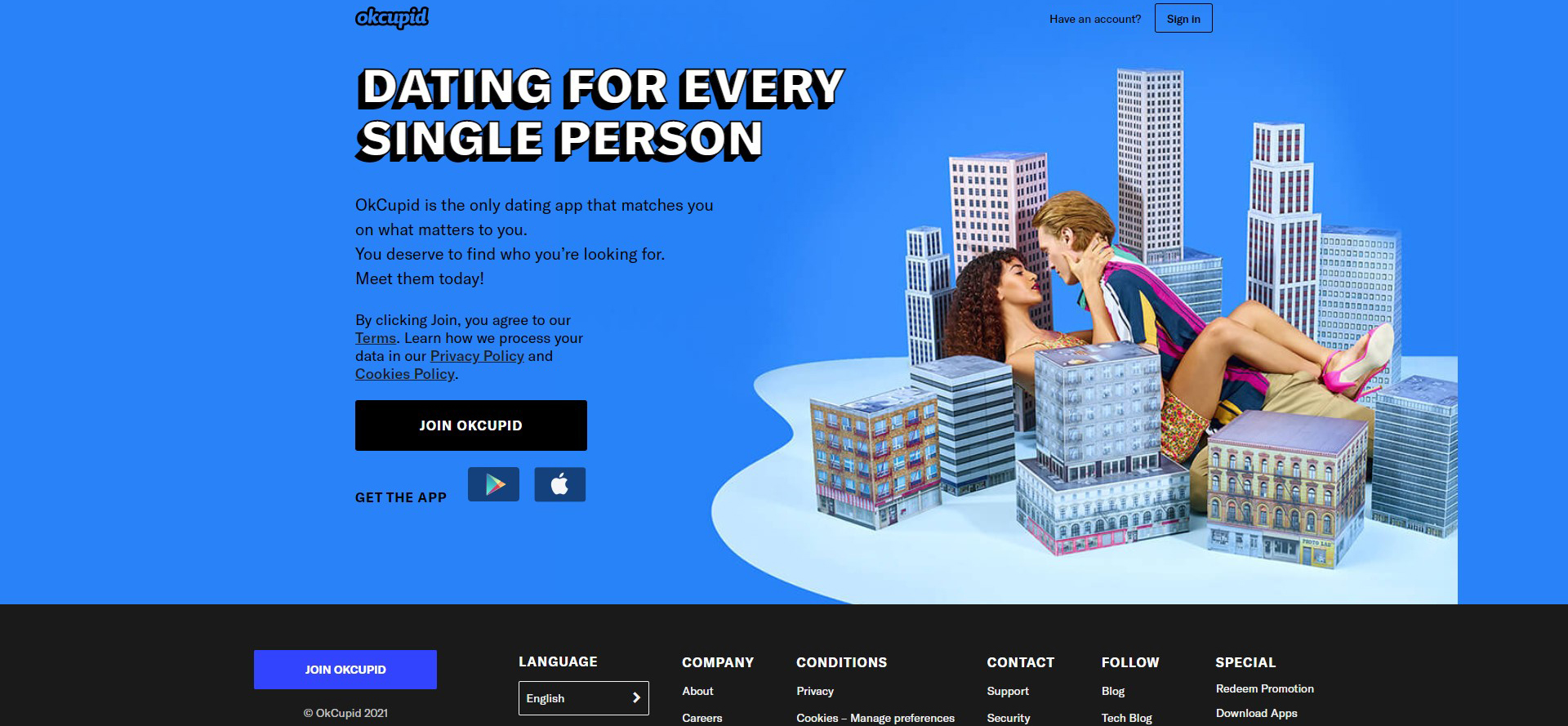
OkCupid launched back in January 2004, built by four Harvard math guys who thought dating should be a data problem. Match Group bought it for about $50 million in 2011, and it's been part of that portfolio ever since. It's US-based, fully available across the USA, and free to join with paid upgrades on top. The core idea hasn't changed: you answer multiple-choice questions, the site scores your compatibility with other members as a percentage, and you browse from there. What has changed is that OkCupid now looks and feels a lot more like a swiping app than the old browse-and-search site people remember.
Registration costs nothing, so if you're on the fence, make a free profile before you decide anything about paying.
The Audience OkCupid Actually Serves Well Today
Let me be blunt about this corner of online dating: most apps pretend to serve everybody, and almost none of them do. OkCupid has a clear core user, and if you're not that person you'll feel it within a week.
That core user is roughly 22 to 38, lives in or near a metro area, and has opinions they'd like a partner to share. Our Lovezoid review team spent several weeks testing OkCupid across multiple US markets, and the pattern was obvious. In New York, Chicago, Austin, Seattle and the Bay Area, the match queue refilled every day with real, active, filled-out profiles. In a mid-size city in the Midwest, the same account ran out of decent matches inside four days and started showing me people 60 miles away.
OkCupid also does genuinely well with LGBTQ+ users. There are 22 gender options and 20 sexual orientation choices, and you can hide your gender identity from straight users if you want to. That's not a marketing line — in testing, queer users had noticeably deeper local pools than on general-purpose apps. Non-monogamous and polyamorous users get real support too, since you can link a partner's profile and state your relationship structure up front instead of awkwardly explaining it in message three.
Who does OkCupid quietly fail? Anyone over about 45. The age filters go higher, but the actual population thins out fast, and half the older profiles I found had no recent activity. People in rural areas or small towns will have the same problem — the questions and compatibility scores mean nothing when there are 30 active accounts in a 50-mile radius. And people who want casual hookups will find OkCupid slower than they'd like; there's a "looking for" field, but the culture on the app leans toward conversation. If you're in a smaller community or you want something more open, a site built around rural and small-town singles is going to serve you better than forcing OkCupid to work.
Where OkCupid Earns Its Reputation With That Crowd
The question system is still the best thing here, and it's not close. OkCupid has thousands of questions covering politics, religion, sex, lifestyle, money, kids, drugs — the stuff you'd normally waste three dates figuring out. For each one you answer, you pick your own answer, the answers you'd accept from a match, and how much it matters to you. The algorithm weights all of that into a compatibility percentage.
Does the percentage actually mean anything? Sort of. I found the number below 60% was a reliable warning sign and the number above 90% was a decent signal, but the middle range was noise. What's more useful is that you can read individual answers. Before I messaged anyone, I could check where they stood on political parties, whether they wanted kids, whether they'd date a smoker. That saved real time. Somebody at 88% who answered "yes" to wanting children when I answered "no" got skipped — a swiping app would never have surfaced that.
Profiles here are also genuinely longer than average. OkCupid gives you multiple prompt-style sections plus a self-summary, and in our testing about 70% of active profiles had at least three sections filled in with real writing. Compared with apps where a profile is a name, an age and one gym photo, that's a big difference. You can actually tell whether someone is interesting.
The communication setup is fair, too. Unlike apps where you can only talk after a mutual match, OkCupid lets you send a message alongside a like, and the recipient sees it in their Intros folder. It's not unlimited — free users get a limited number of likes per day, which resets — but it means a well-written first message can break through without needing a mutual swipe. Response rates in my testing sat around 20-25% when the message referenced something specific from the profile, and near zero for "hey."
The mobile app is stable on both iOS and Android. It loads fast, messages arrive without lag, and it does everything the desktop site does. I'd actually say the app is better than the desktop version now, which tells you where OkCupid is putting its development money. There's also a Boost feature that pushes your profile to the front of local queues for 30 or 60 minutes, and Super Likes ("Super Boost" style promotion), both sold as add-ons.
One more thing worth noting: the sign-up flow is quick. Email, password, basic info, a photo, phone verification, then it drops you into questions. Under ten minutes to a usable profile, and you can add questions gradually over weeks instead of grinding through 200 at once.
The Parts That Wore Me Down After Two Weeks
The biggest complaint is one longtime users have made for years: OkCupid killed real search. You used to be able to browse the entire local user base and filter it however you wanted. Now you get a card-based match stack, and the only way to filter is with paid "Dealbreakers." Free users get age, distance and a couple of basics. That's it. If you want to filter by whether someone smokes, or by education, or by whether they want kids, you're paying.
Second issue: the free tier is squeezed harder every year. Free accounts show ads between profile cards, cap your daily likes, and hide who liked you. You can see that four people liked you — you just can't see who. That's a deliberate, slightly annoying design choice, and it's the main thing pushing people toward a subscription.
Third: inactive profiles. OkCupid doesn't clearly mark dead accounts, and in our 2026 testing roughly one in five profiles I liked never showed any activity. There's no "last online" indicator visible to free users. I sent messages into what were almost certainly abandoned accounts more than once, and there's no way to know until you've already wasted the effort.
You should also know the match quality drops off a cliff after the first week. The algorithm front-loads its best local matches, and once you've worked through them, the stack starts showing people further away and less compatible. This isn't unique to OkCupid, but it's noticeable because the compatibility percentage makes the decline visible — week one averaged 85%, week three averaged around 68%.
Smaller annoyances that added up: the upsell prompts appear after almost every action on the free tier; Boost costs extra even if you're a paying subscriber; the desktop layout wastes a lot of screen space; and message notifications sometimes arrived several minutes late. Also, the compatibility percentage only calculates properly if both people have answered a decent number of the same questions, so newer profiles often show no score at all.
If long profiles and question-answering sounds like homework to you, a faster, more visual swiping platform will suit you better. There's no shame in that — different apps, different work.
What OkCupid Costs, How Safe It Is, and Who Should Pay
Pricing in the USA breaks into two tiers. OkCupid Basic runs about $11.99 for one month, dropping to roughly $7.99 per month on a 3-month plan and around $5.99 per month on 6 months. That gets you no ads, unlimited likes, Dealbreaker filters, and the ability to see all your Intros at once. OkCupid Premium is a much bigger jump: about $39.99 for one month, roughly $26.66 per month on 3 months, and around $19.99 per month on 6 months. Premium adds seeing everyone who liked you and reading a match's public question answers even if you haven't answered them yourself.
Prices shift with promotions and sometimes by market, so check the current rate before committing.
Is premium worth it? Here's my honest read. Basic on a 6-month plan is decent value — the Dealbreaker filters alone save real time, and losing the ads makes the app pleasant instead of grating. Premium at $39.99 a month is hard to justify. The main perk is seeing your likes, and in testing that list was mostly people I'd already been shown and passed on. If you're in a big city and using OkCupid seriously, buy Basic. If you're in a thin market, no subscription will fix your local pool.
On safety, OkCupid is legit — it's a Match Group property with a two-decade track record, not a scam operation. Phone verification is required at signup, which cuts down on throwaway accounts, and there's optional photo verification that adds a badge to your profile. Privacy controls are reasonable: you can browse in incognito mode with a subscription, hide your profile from straight users, block and report from any profile, and control whether your answers are public.
Bots and scammers? They exist, but the volume was lower than I expected. Over several weeks our Lovezoid testers flagged maybe four suspicious accounts — the usual pattern of one glamorous photo, empty profile, immediate push to move to another messaging app. Reports were acted on within a day or two. The bigger risk on OkCupid isn't bots, it's romance-scam attempts that build rapport slowly. The rule that always holds: nobody you met online should ever be asking you for money, gift cards or crypto, no matter how good the conversation has been.
Final Verdict on OkCupid
OkCupid is a good app for a specific person. If you're 22-38, in a US metro area, you care about values and politics in a partner, and you'd rather read a paragraph than judge a photo, this is one of the better options available and worth using seriously. It's also one of the strongest mainstream choices for LGBTQ+ and non-monogamous users, and that's not a small thing.
Look elsewhere if you're over 45, if you live somewhere rural, if you want casual and fast, or if the idea of answering 100 questions makes you tired. Those users will hit the app's limits within a week. Depending on what you actually want, there are platforms built for singles over 50, high-volume swiping apps, or arrangement-focused dating sites that fit those needs far better than OkCupid ever will.
Our rating lands at solid-but-flawed: excellent matching depth, above-average profile quality, genuinely good LGBTQ+ support, dragged down by the loss of real search, a squeezed free tier, and Premium pricing that's tough to defend at $40 a month. Basic on the 6-month plan is the sweet spot if you decide to pay.
Make a free profile, answer 50 or 60 questions, and give it two weeks before you spend anything. If the local match queue stays full and the conversations feel worthwhile, upgrade to Basic. If it dries up fast, you'll know within days — and the comparison table above will point you somewhere better suited to your situation.
FAQ
Are the profiles real, or am I mostly messaging inactive accounts?
Most profiles on question-based matching platforms belong to real people, but a large share of them are dormant — accounts created years ago that nobody logs into anymore. The bigger frustration for US users isn't bots, it's silence: you'll message someone who last opened the app in 2022. Filter or sort by recent activity when possible, and prioritize profiles with completed questions and multiple photos, since those users tend to be genuinely active.
How much does a paid membership actually cost, and can I get by for free?
Paid tiers on personality-quiz dating platforms typically run about $20–$40 per month, with six-month plans dropping the monthly rate to roughly $10–$20. You can genuinely use the free version — browsing, matching, and messaging matches usually work without paying, which is more than most mainstream apps allow. The paid upgrade mainly buys you likes-you visibility, ad removal, advanced filters, and read receipts, so it's worth it only if you're actively logging in several times a week.
Is a question-based matching site better than mainstream swipe apps for finding a real relationship?
It tends to work better if you care about values, politics, and lifestyle compatibility rather than photos alone. Detailed answers and compatibility scores give you real conversation material, which usually leads to longer first messages and fewer dead-end chats than pure swipe apps. The trade-off is a smaller active pool, especially outside major US metro areas, and a slower pace — you'll get fewer matches but often better-quality ones.
Is it safe to answer all those personal questions about sex, politics, and religion?
Your individual answers are only visible if you choose to make them public, and you can skip any question or hide sensitive ones entirely. Still, treat everything you write as potentially findable — people have been recognized from their answer patterns, photos, and hometown details combined. A reasonable approach is to answer the compatibility questions honestly but keep explicit sexual answers private, and never include your workplace, gym, or neighborhood in your profile text.