



Quick verdict: Is Tinder still worth downloading, or has it turned into a paywall with pictures? Honestly, it's both — Tinder remains the biggest source of real, active singles in the USA, and it's still the fastest way to get matches if you're under 35 and live near a city. Skip it if you want long questionnaires, deep filtering, or a serious relationship-first crowd, because this Tinder review will show you the app pushes speed over depth, and men in particular will feel the free version's limits within a week.
Tinder launched in 2012 out of Los Angeles and basically invented the swipe. It operates in 196 countries and more than 40 languages, and the USA is its home market — which means American users get the densest pool of profiles and the newest features first. The audience skews young: most people we saw were 20 to 34, with a thinner but real slice in the 35–45 range. It's fully available on the web, iOS and Android, and you can create an account for free in about three minutes.
What Using Tinder Actually Feels Like
Lovezoid's review team ran Tinder for four weeks across two accounts — one male, one female — in a mid-sized US metro area. The first thing that hit me was the sheer volume. Within 20 minutes of finishing the profile, the female test account had 47 likes waiting. The male account, with a similar photo quality, got 3 matches in the same period. That gap is the single most important thing to understand about Tinder before you spend a dollar: the experience is wildly different depending on your gender and photos.
The interface is genuinely good. Cards stack in the center, you swipe right for interest and left to pass, and it's smooth enough that an hour disappears without you noticing. That's part of the design and part of the problem — Tinder is built to keep you swiping, not to get you off the app. There's no clutter, no confusing menus, and the whole thing loads fast even on weaker connections.
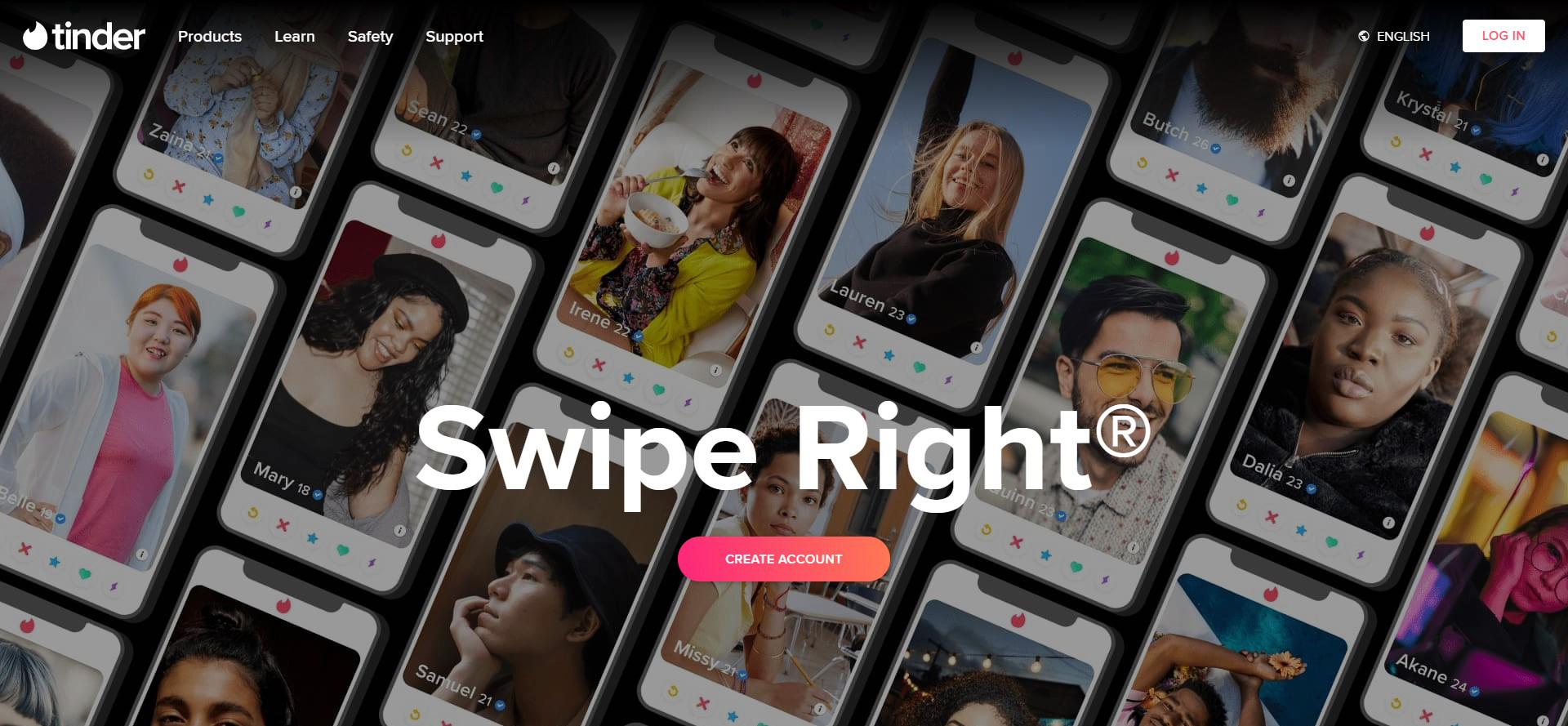
Activity levels are the strongest argument for Tinder. Messages got replies. People were online at 11pm on a Tuesday. In our test city, we ran out of new profiles within a 25-mile radius after about 900 swipes — which sounds like a limit, but that's a lot of real accounts. In smaller towns and rural areas the pool empties much faster, and once you widen the distance to 100 miles, the matches stop being practical. If you live somewhere with more cornfields than coffee shops, you may have better luck on apps built for country singles.
The annoyances showed up quickly. Free users get a daily like limit — we hit roughly 50 to 100 swipes right before the app cut us off with a 12-hour timer and a purchase screen. Ads appear between cards, usually every 10–15 profiles. And profiles are thin: many people write nothing at all, so you're judging four photos and a first name. Conversations often die after two messages, which isn't Tinder's fault exactly, but the low-effort culture the app creates definitely contributes.
The Features Behind The Swiping
Matching on Tinder is location-plus-preference based. You set age range, distance, and who you want to see, and the algorithm handles the rest. There's no compatibility test, no personality scoring, no questionnaire. Tinder's system quietly ranks you based on how others respond to your profile, and while the company has changed how this works over the years, the practical effect is the same: better photos mean more visibility. If you want detailed filtering by lifestyle, politics or beliefs, this is not that app — some users prefer question-based matching systems for exactly that reason.
Communication only unlocks after a mutual match, which is a real safety feature. Nobody can message you out of nowhere. Once matched, you get text chat, GIFs, and photo sharing. Video calling (Face to Face) works inside the app so you don't hand out your number — we used it twice and the quality was fine, though both parties have to opt in first.
The features worth knowing about: Super Likes tell someone you're extra interested and genuinely do improve reply rates in our testing; Rewind undoes an accidental left swipe (paid only, and yes, you will want it); Boost pushes your profile to the front of the local queue for 30 minutes; Passport lets you swipe in another city, which is useful before a trip. Explore adds themed groupings and interest tags, and it's decent for finding people who at least share a hobby. Spotify and Instagram linking still exist and honestly do more for profile quality than the bio field does.
The mobile app is the main event and it's polished — few crashes, quick loading, and clearly where most development effort goes. The desktop version works but feels like an afterthought; notifications are less reliable and some features are missing. Our Lovezoid testers found the app version noticeably better for staying on top of conversations.
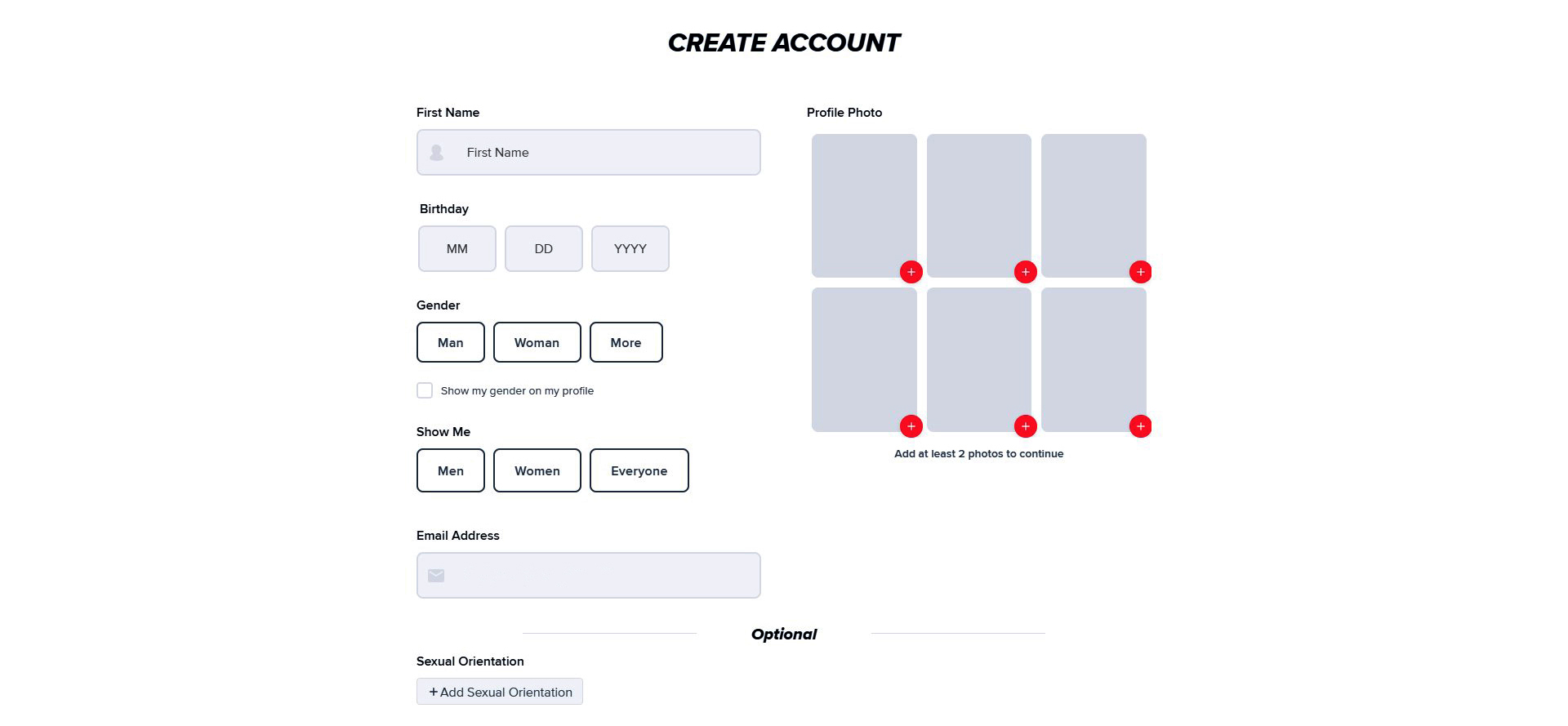
Signing up is fast. You register with a phone number (recommended), Google, or Facebook, confirm a code, then add your birthday, gender, orientation and photos. You can be swiping in under five minutes. But that speed cuts both ways — a profile you can finish in three minutes is a profile nobody has to think about. Worth trying the free account first to see how your local pool looks before you consider paying.
Where Your Money Actually Goes
Tinder is freemium, and the free version is usable — you can match, message, and meet people without paying anything. That's real. But the limits are designed to be felt: capped likes, no Rewind, ads, and no way to see who already liked you.
There are three tiers, and pricing in the USA changes based on your age bracket, which still strikes me as an odd choice. As of 2026, Tinder Plus runs about $4.99/month for users 18–29 and $9.99/month for 30+, dropping to roughly $19.99 or $39.99 for a year. Gold sits around $14.99/month (under 30) or $29.99/month (30+), with annual plans near $59.99 and $119.99. Platinum lands at about $19.99 or $39.99 monthly, with yearly options around $79.99 to $149.99. Prices shift with promotions and app-store region, so check the in-app screen before you commit.
What do you get? Plus removes ads, gives unlimited likes, Rewind, and Passport. Gold adds "See Who Likes You" plus free daily Super Likes and monthly Boosts. Platinum layers on message-before-matching and priority likes. So is premium worth it? Here's my honest read: for men in busy markets, Gold changes the math the most, because seeing your incoming likes turns hours of blind swiping into a short list of guaranteed matches. For women, who typically receive plenty of likes already, paying buys convenience rather than results — Plus at most.
The upsells got old fast. Hit your like limit and you get a purchase screen. Try to Rewind and you get a purchase screen. Open the app after a quiet day and there's an offer. It's not deceptive, but it is relentless. Also be careful with the yearly plans — they auto-renew, and cancelling has to be done through your app store subscription settings, not inside Tinder itself. That trips people up constantly.
If you're over 45, the value case gets weaker, because the pool thins out and you'll be paying for access to a crowd that isn't yours. In that case, platforms for singles in the 50-plus bracket make more sense than paying Tinder's 30+ rate.
Safety, Verification And Legitimacy
Is Tinder legit? Yes, without question. It's owned by a publicly traded company, has been operating since 2012, and processes payments through Apple and Google. Nobody is stealing your credit card here.
Bots and scammers are a different conversation. Tinder has photo verification — you copy a set of poses on camera and get a blue checkmark — and it works, though a minority of users bother with it. There's ID verification in some markets now, and celebrity accounts get manual authentication. In our four weeks of testing we ran into 6 clearly fake or scam accounts out of several hundred matches. The pattern is predictable: model-quality photos, immediate move to WhatsApp or Telegram, then either a crypto pitch or a "verification site" link. Reporting them took two taps and the profiles disappeared from our queue.
Are the fakes bad enough to ruin the app? No. But if you're new to online dating, understand this: nobody legitimate needs your money, your phone number in the first five messages, or a link to an outside site. That advice applies everywhere, including other big swipe-based platforms and any site where arrangements are part of the deal.
Privacy controls are decent. You can hide your age and distance (paid), block contacts so coworkers don't find you, and use Incognito mode on higher tiers so you only appear to people you've liked. Tinder doesn't run background checks, and it does collect substantial location and usage data — standard for the industry, but worth knowing. The main recurring complaint we saw from US users involves account bans that feel arbitrary, with limited appeal options. That happens rarely, but it happens.
Final Verdict on Tinder
Tinder earns its reputation on volume and simplicity, and loses points on depth and monetization pressure. Our Lovezoid rating lands solidly in the "good, with caveats" range — around 4 out of 5 for users who match its profile, and closer to 2.5 for those who don't.
- Best for: singles aged 20–34 in or near US cities who want casual dating, quick meetups, or to see who's around tonight.
- Skip it if: you're over 45, live rurally, want detailed compatibility matching, or hate being sold to inside an app.
- Pay only if: you're a man in a busy market — Gold's "See Who Likes You" is the one upgrade that clearly saves time.
- Reality check: real people, real activity, and a real share of thin profiles and dead conversations.
My recommendation: install it, build a proper profile with four good photos and an actual bio, and swipe free for a week before paying anything. Registration costs nothing, and one week tells you more than any review can — if the free version leaves you cold, check the comparison table above for options that suit you better.
FAQ
How can you tell if the profiles on a big swipe app are real people or bots?
Real accounts usually have multiple photos in different settings, a filled-in bio, and linked social or music info, while bot and scam accounts tend to use one glamorous photo and push you to another platform within minutes. Mainstream swipe apps do run photo verification and remove fake accounts in waves, but new ones appear daily, so treat anyone who refuses a quick video chat or asks for money, gift cards, or crypto as a scam. Reporting takes about ten seconds and actually helps clean up your local deck.
What does it really cost per month once you go beyond the free version?
Paid tiers on major swipe apps in the U.S. typically run about $10–$25 per month for the basic upgrade and $30–$40 or more for the premium levels, with cheaper per-month rates if you commit to six or twelve months. Prices are also age-adjusted on some platforms, so users over 30 often see higher quotes than users in their twenties. Add-ons like profile boosts and super likes are sold separately, which is how a "cheap" subscription quietly turns into $50 a month.
How long does it usually take to go from swiping to an actual date?
For most people it takes one to three weeks of consistent daily use to land a first in-person date, and matching is heavily skewed — many men get a handful of matches a week while many women get dozens a day. Expect a large drop-off: roughly one in five matches replies, and only a fraction of those convert to a meetup. Moving from chat to a coffee or drink within three or four days of matching dramatically improves your odds, because conversations that drag on for weeks almost never happen in real life.
Is it worth using a mainstream swipe app if you want a real relationship instead of hookups?
Yes, plenty of long-term couples in the U.S. met on high-volume swipe apps, but you'll have to filter harder than on relationship-focused or specialized platforms. Write a bio that clearly states you're looking for something serious, use the app's relationship-goal settings, and be willing to unmatch quickly when intentions don't line up. If constant swiping and casual-first messaging burns you out, a smaller niche site aimed at your age group, faith, or lifestyle will usually give you fewer but better-aligned matches.