



Faith-based dating sites tend to fall into two camps: tiny communities where nobody has logged in since 2019, and giant platforms that slap a religion filter on a generic template and call it a niche. This CatholicMatch review exists because the site sits somewhere in between, and that middle ground is exactly where people waste money. Our verdict up front: CatholicMatch is legitimate, genuinely Catholic in a way that goes past the label, and worth paying for if you want marriage and you live near a decent-sized U.S. city. If you want casual dates, quick replies, or you live somewhere rural, the thin local numbers will frustrate you fast.
Worth setting up a free profile before you decide anything — registration costs nothing and you'll see your local numbers within ten minutes.
What Is CatholicMatch?
CatholicMatch launched in 1999 under the name SaintRaphael.net, which makes it one of the oldest religious dating platforms still running. It's fully available across the USA, and the U.S. is basically its home turf: of roughly 1.5 million registered members, around 1.2 million are American. The site claims about 16,500 logins a day, and the gender split leans female at roughly 60/40. The target user is clear from the first signup screen — a practicing Catholic who wants a sacramental marriage, not a hookup. Lovezoid's review team spent several weeks inside the platform in 2026, creating profiles in both a large metro area and a smaller Midwestern town to see how different the experience gets.
Our First Two Weeks Inside
The signup is the first honest test of whether you actually want this. It took me 26 minutes. Not because the form is broken, but because CatholicMatch asks a lot: location, diocese, marital status (including whether a previous marriage was annulled), your stance on Church teaching, how often you attend Mass, lifestyle habits, appearance, even food preferences. Then there's the "about me" field with a 150-character minimum and a 2,500-character ceiling. You cannot skate through with three words and a gym selfie.
That barrier is the site's best feature and its biggest turn-off at the same time. Profiles I read were genuinely detailed — paragraphs about parish life, discernment, wanting kids, whether they'd relocate. Compared to what I usually see on general apps, the difference is stark. But plenty of people quit halfway through that form, which is part of why the daily active number is modest for a site with 1.5 million registrations.
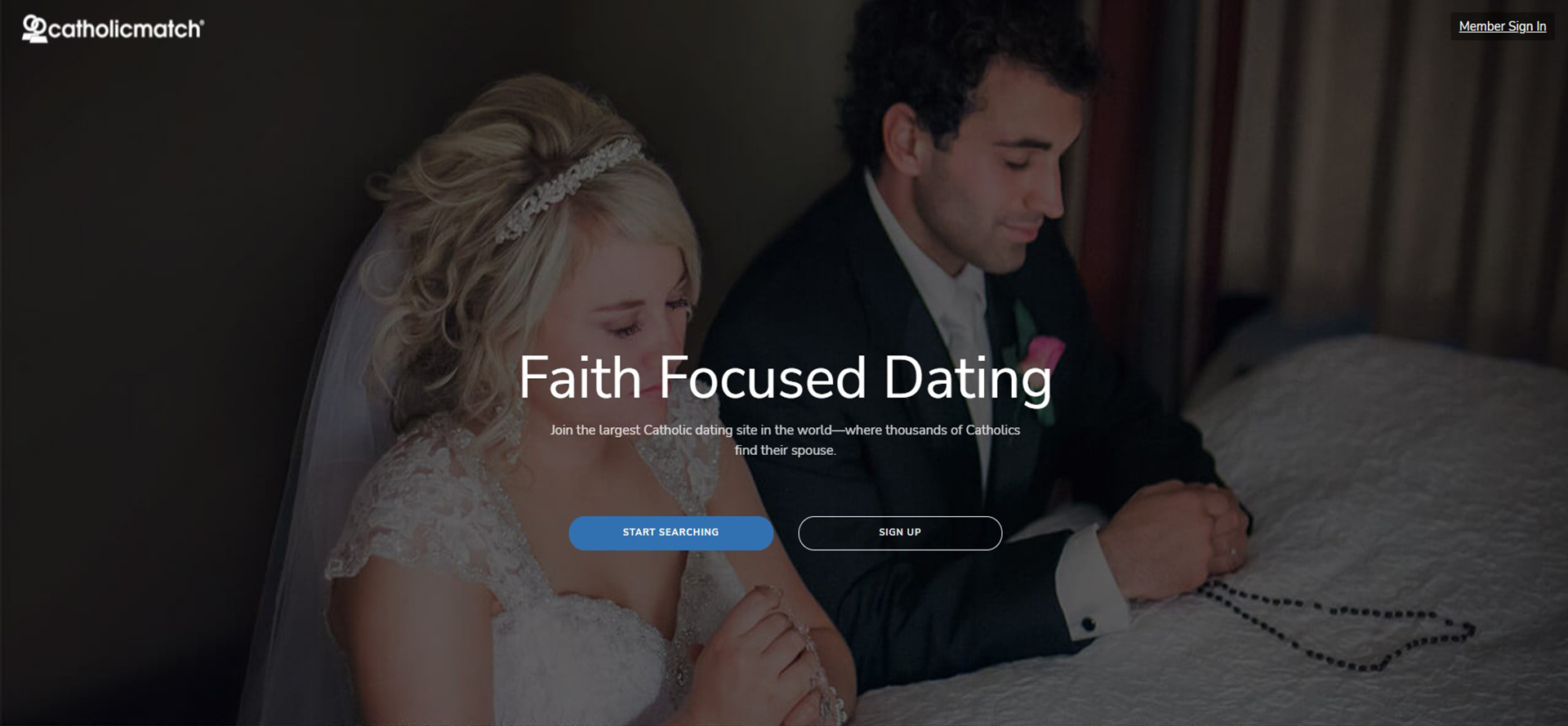
The interface looks like it was designed around 2014 and updated politely since. It's clean, it loads fast, nothing is hidden behind weird menus — but it's not pretty. Photos display small, the layout is text-heavy, and the profile page dumps your photo gallery at the bottom rather than showing it up top. After a few days I stopped noticing. If you need a slick, image-first feed, this will feel like reading a church bulletin.
Activity was the real story. In the metro test account, I had a handful of profile views within 48 hours and two replies inside the first week. In the small-town account, the search radius had to stretch to 100 miles before I could fill a page with active members, and about a third of those hadn't logged in for over a month. The site shows last-login information, which I appreciated — it saved me from messaging ghosts. Response speed is slower than mainstream apps across the board. People here write actual sentences, and they take a day or two to do it.
The forums surprised me. There are active discussion boards on annulments, NFP, parish life, saints, and plenty of off-topic chatter, and some of them get real traffic. Free members can read them but not post, which felt like a cheap paywall on the one part of the site that builds community. Also annoying: the interest-based upsell prompts. Every time I tried to open a message, the paywall popped up with the same three-tier pricing box. By day four I could have recited it from memory.
The Machinery Behind the Matches
CatholicMatch doesn't run a black-box algorithm that spits out "your soulmate." It's mostly a search-and-filter system layered over that long questionnaire, which I think is the right call for this audience. You can filter by distance, age, marital status, whether they want children, and — the interesting one — by their stance on specific Church teachings. Filtering by diocese is possible too, which is oddly practical if you want someone who shares your parish life.
The two filters people actually use are the faith-practice ones. Being able to screen for "attends Mass weekly" or "accepts all Church teaching" removes the awkward third-date conversation entirely. On the flip side, the filter panel isn't as deep as the questionnaire suggests. You answer dozens of questions during signup, but you can't search on most of those answers — things like food preferences and hobbies live on the profile only. That gap felt like wasted effort.
Communication runs on standard messaging plus two quirks. "Emotigrams" let you send a wink, a smile, or a small graphic as an icebreaker — free members can send them, which is genuinely useful, because it lets you signal interest without paying. The "temperament test" categorizes you into a classic personality type and displays it on your profile; it's more conversation starter than science, but people did reference mine in messages. There's also a question-and-answer style "interview" section where other members can see how you responded to prompts about faith and family.
Free members get three profile likes per day. That cap is tighter than it sounds when you're browsing a list of 40 people. There's also a snooze function for hiding your profile, and photo hosting up to 50 images, which is more than anyone needs.
The mobile app arrived in 2019 — late, and it shows. It works on Android and iOS, mirrors the desktop features, and doesn't crash, but it's plain and search feels cramped on a phone screen. Our Lovezoid testers ended up doing the browsing on desktop and the messaging on mobile, which is honestly a fine workflow. If you only ever date from your phone and expect a swipe-first design like the big swipe-based apps most people start with, you'll find this clunky.
Is CatholicMatch Worth Paying For?
Here's the free-versus-paid reality, and it's less brutal than most sites. A free account gets you a full profile, unlimited searching and profile viewing (photos included — no blurring), three likes a day, emotigrams, and forum reading. You can also receive messages, but you can't read them for ten days. That delay is the whole business model in one sentence: someone interested wrote to you, and the site makes you wait nearly two weeks to find out what they said.
You can absolutely use the free tier as a scouting trip. Search your zip code, check how many active members are within 50 miles, look at profile quality, then decide.
Premium unlocks instant reading and replying, personalized messages with emotigrams, seeing who liked you, forum posting, and access to support and coaching material. As of 2026 the pricing runs about $29.99 for one month, $89.94 for six months (roughly $15 a month), and $119.88 for twelve months (about $10 a month). That's mid-range for U.S. dating subscriptions, and the annual plan is fair value. The monthly plan is not — $30 for a site where people reply in two days means you'll burn a third of your month waiting on conversations.
My honest take on value: pay if your local search shows at least 50–100 recently active members in your age range, and pay for six or twelve months if you do. Faith-focused dating moves slowly, and a 30-day sprint doesn't match the pace of the people here. If your area is thin, no subscription fixes that, and you're better off widening your approach — some members told me they also use broader sites with detailed compatibility questions alongside this one, and older Catholic singles often add a platform aimed at the over-50 crowd to get enough local volume.
Safety, Verification and the Bot Question
CatholicMatch is a real company with a 25-plus-year history, not a scam operation. Email verification is mandatory — you click the link from your inbox or the profile gets flagged as fake and removed. Staff review profiles and photos, and the tone of moderation is noticeably strict compared to open platforms.
Bots and obvious fakes were rare in our testing. Across several weeks and two accounts, we got no crypto pitches, no "I'm an oil rig engineer" openers, and no instant links to external chat. That's a much cleaner result than you'll get on huge open-registration social discovery apps. The reason is structural: the signup grind, the human review, and a paywall on messaging all discourage low-effort scammers.
That said, no site is spotless. A few profiles had recycled stock-looking photos and thin bios, and I saw the occasional account that pushed to move the conversation off-site within two messages. Romance scammers do target faith communities precisely because trust is high, so treat unusually fast declarations of love as a red flag no matter how many rosary references appear. You'll also want to be cautious with anyone whose profile emphasizes financial hardship — that pattern shows up on any platform, including arrangement-style sites where money is openly part of the deal.
Privacy controls are decent but basic. You can snooze or hide your profile, block members, and report accounts, and support responded to our test report within about two days. What you can't do is browse fully anonymously on the free tier, and there's no photo-verification badge system, which by 2026 standards feels like a missing piece. The most common complaint we found from long-term users echoes what our own testing showed: the ten-day message delay for free users, and thin membership outside big metro areas.
Final Verdict on CatholicMatch
CatholicMatch earns a solid recommendation for a specific person: a practicing Catholic in a U.S. metro area who wants marriage, will write a real profile, and has the patience for slower conversations. Skip it if you want casual dating, instant replies, a modern app experience, or if you live somewhere with almost no members within 100 miles — the subscription won't create people who aren't there. Our Lovezoid testers rated it strong on profile quality and safety, average on interface and app, and honest but slow on activity. Set up a free account, check your local numbers, and if the search results look alive, the six- or twelve-month plan is the only pricing that makes sense.
FAQ
How do I know members are actually practicing Catholics and not just checking a box?
You don't, at least not from the profile alone — nobody verifies sacraments or Mass attendance. Faith-focused platforms do give you tools most mainstream apps lack: fields for how often someone attends Mass, which Church teachings they accept, and whether they're open to a large family. Those answers are self-reported, so treat them as conversation starters and expect a range from daily communicants to "culturally Catholic" members who haven't been to confession in a decade.
What does a Catholic dating site actually cost after the free trial?
Expect roughly $30–$40 per month for a one-month plan, dropping to about $15–$20 a month if you commit to six months or a year. Free accounts on these niche platforms usually let you build a profile, browse, and use forums, but messaging is gated behind a subscription. Watch for auto-renewal — most faith-based sites renew silently, so cancel in your account settings before the term ends if you're done.
Is a Catholic-only site better than mainstream apps for finding a spouse?
It's better for filtering, worse for volume. On a specialized platform, nearly everyone shares your baseline beliefs about marriage, annulment, and contraception, which saves you the awkward third-date conversation that kills a lot of mixed-faith matches. The tradeoff is a much smaller pool — in rural areas or smaller dioceses you may exhaust local profiles in a week, while a mainstream app in the same zip code has thousands. Many people run both: the niche site for compatibility, the big app for reach.
Are the profiles real, or is it full of bots and fake accounts?
The majority are real people, but faith-based sites are a known target for romance scammers because members are perceived as trusting and generous. Red flags are consistent: a widowed "engineer working overseas," rapid declarations of God-given love, refusal to video chat, and eventually a financial emergency. Real members will happily do a five-minute video call before meeting — anyone who won't is not worth your time.
How long does it usually take to get a first date?
Plan on several weeks to a couple of months, not days. Response rates on faith-focused platforms tend to be slower than swipe apps because members are screening more carefully and often aren't checking the site daily. If you're in a major metro with a big Catholic population you may have coffee lined up in two weeks; in a small town, distance often means the first date requires a drive. Sending personalized first messages instead of winks or likes makes the biggest difference.
I'm divorced — is there any point in joining a Catholic dating site?
Yes, but be upfront about your annulment status in your profile. Many members will only date someone whose previous marriage has been declared null, and hiding it wastes everyone's time and leads to painful conversations later. Most faith-based platforms include an annulment field precisely because this comes up so often, and there's a real population of divorced and widowed members in their 40s, 50s, and beyond. If your case is still in process, say so — some people will wait, others won't, and it's better to know early.