






Wondering whether a dating site built for country folks actually works? Sometimes yes — but it depends almost entirely on where you live. Our FarmersOnly review comes down to this: if you're in a rural county in the Midwest, the South or farm country in general, FarmersOnly gives you a small but genuinely relevant pool of people who understand 5 a.m. chores and spotty cell service. If you're in a city or a coastal metro, you'll open the search results, see 40 profiles within 100 miles, and wonder what you paid for. Best for rural singles over 30 who are tired of explaining their lifestyle. Skip it if you want volume, slick design, or a modern app experience.
What Is FarmersOnly, Exactly?
FarmersOnly launched back in 2005, started by Jerry Miller after he heard a farming woman complain that nobody on regular dating sites understood her schedule. The slogan — "City folks just don't get it" — turned into a low-budget TV ad that went viral and pulled in millions of sign-ups. Today the site claims several million registered members across the United States and Canada, aimed at farmers, ranchers, cowboys and cowgirls, horse people, hunters and anyone who just prefers open space to sidewalks. It's fully available across the USA, with the heaviest concentration in states like Ohio, Texas, Iowa, Missouri, Pennsylvania and Kentucky. Registered members and active members are two very different numbers, though, and that's where our testing got interesting.
Our First Weeks Inside
Sign-up is fast, and that's a good start. Lovezoid's review team created accounts from three different zip codes — a rural one in Ohio, a mid-size town in Texas, and a suburb of Chicago — and each registration took under five minutes. You give your age, gender, who you're looking for, an email and a zip code. FarmersOnly then emails you a username and password, which felt strange in 2026 — most sites let you pick your own. Click the verification link and you're in.
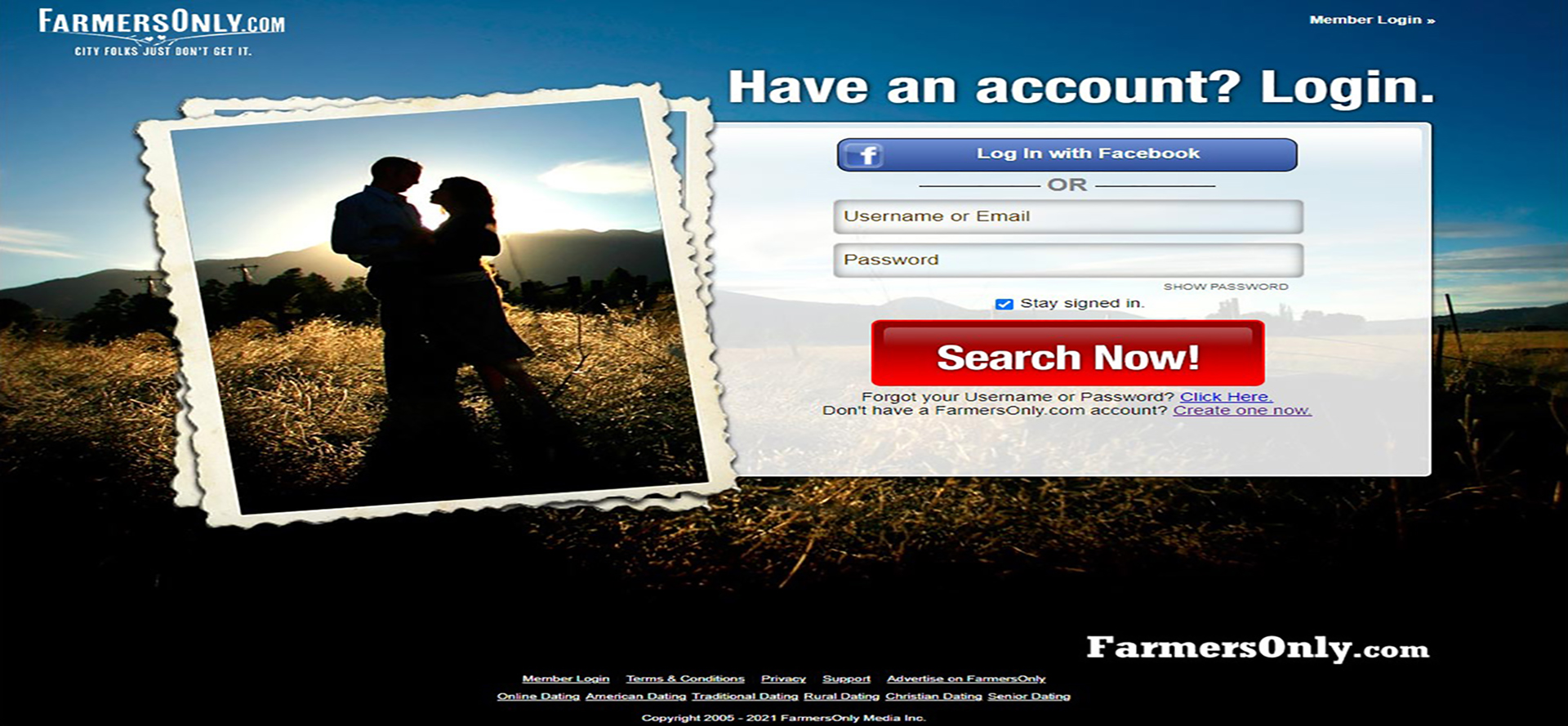
The first thing that hits you is the design. The site looks like it hasn't had a real redesign in a decade: chunky buttons, a barn-red and green color scheme, small text, and photo thumbnails that load at odd sizes. It's not broken — everything works — but it feels dated in a way that will bother anyone used to modern apps. Oddly, some of our testers found the plainness reassuring. There are no flashy animations trying to distract you from the fact that a message costs money.
Activity levels were the biggest surprise, in both directions. In our rural Ohio test account, the "Who's Online" list regularly showed 60 to 120 people at midday, and profiles within 50 miles ran into the hundreds. Flirts came in within hours of the profile going live. In the Chicago suburb account, results within 50 miles were thin and a lot of them were clearly inactive — last login months earlier. So the honest answer to "are people actually online?" is: yes, if your county has cattle in it.
Profile quality was better than we expected. This isn't a place full of one-line bios and gym mirror selfies. Members write actual paragraphs about their farms, their kids, their church, their horses. Photos tend to be candid — someone on a tractor, someone holding a calf, someone in a deer stand. The average member skews older than the site's own claims suggest; in our testing, most active users looked to be in the 35–60 range rather than the 25–34 bracket often quoted. Men outnumber women noticeably, which means women get a lot of attention fast and men have to work harder.
Things that annoyed us during the first weeks:
- You can't reply to a message without paying — you can see that a message exists, which is a classic pressure tactic.
- The auto-generated username is hard to change and often looks like random letters.
- Search filters are basic: age, distance, gender, a handful of lifestyle boxes. No filtering by education, income, religion depth or whether someone is verified.
- Some profiles hadn't been touched in over a year but still appeared in results without a clear "inactive" label.
The Features Doing the Heavy Lifting
FarmersOnly isn't trying to out-engineer anybody. There's no personality test, no compatibility algorithm crunching 200 data points. Matching is essentially you doing the work with a search form, plus a light recommendation feed. For some people that's refreshing. If you want an algorithm that hands you daily picks based on a questionnaire, you'd be happier on a site with deeper personality-based matching.
Here's what you actually get to work with:
- Search and browse: filter by age, distance and a few lifestyle traits, then scroll. Simple, fast, and honestly the most useful tool on the site.
- Discover: a thumbs-up / thumbs-down photo feed of nearby members. It's the closest thing to swiping here, and it mostly serves up people within driving distance.
- Flirts: a one-click "I noticed you." Free members can send them but can't see who sent theirs, which is the site's main paywall pressure point.
- Messaging: unlimited once you pay. Plain text, no read receipts unless you count "last online," no voice notes, no video chat.
- FarmPhone: forwards your messages to your phone as texts. Useful if you're out in a field with no interest in checking a browser.
The FarmPhone feature is the one genuinely clever idea here. It's built around the reality that a lot of members don't sit at a desk. Messages come to your phone, you reply, and you never open the site. For someone working 12-hour days, that solves a real problem — though it costs extra, which we'll get to.
There's also a FarmersOnly store selling hats, mugs and t-shirts with the logo. Charming, irrelevant to dating, and a small sign of where the company's energy has gone over the years.
The mobile app is the weakest part of the package. It exists for Android, it mirrors the website's main functions, and it works — but reviews in the store are rough, updates are infrequent, and iPhone users are largely stuck using the mobile browser. In our testing the app crashed twice on photo uploads and the notification timing was inconsistent, sometimes lagging by an hour. If your dating life happens entirely on your phone, this will frustrate you. Compared to the polish you'd get from a swipe-first app built for phones, FarmersOnly feels like a website with an app bolted on.
Privacy tools are basic but present. You can hide your profile so it doesn't show in search — it logs you out when you do, which is a bit clumsy. Paid members can block people. There's no incognito browsing tier, no photo-blurring option, and no way to hide your last-online status.
Where Your Money Actually Goes
Let's be blunt about the free tier: it's a shop window. You can register, search, look at photos and send flirts. You cannot read or send messages, you cannot see who flirted with you, and you can't block anyone. That last one matters — a free user being pestered has no real defense besides ignoring it.
Pricing in the USA, at the time of our testing:
- Premium — 1 month: around $21.95
- Premium — 3 months: around $39.96 (roughly $13.30/month)
- Premium — 6 months: around $65.94 (roughly $11/month)
- Gold add-on: about $9.99/month — highlights your messages in gold so they stand out in inboxes
- FarmPhone: about $4.95/month for SMS forwarding
The one-month price is steep for a site this small and this dated. Stack Premium plus Gold plus FarmPhone and you're near $37 a month, which is premium pricing for a plain product. The three- and six-month plans are where the value sits, and that's clearly by design. Promo codes do circulate — we saw discounts around holidays and seasonal promotions several times a year — so it's worth checking before you commit.
So is Premium worth paying for? It depends on one question: how many active people are within an hour's drive of you? Run the free search first, filter to 50 miles, and count how many profiles have logged in within the last week. If that number is 30 or more, a three-month plan is a reasonable bet. If it's under 10, no subscription will fix that. Our Lovezoid experts think the honest math here is geographic, not romantic.
You don't need to guess. Register free, run the search, count the active profiles in your area, and decide from there — it costs nothing to check.
Is Gold worth it? We tested it against a plain Premium account and saw a modest bump in reply rates, maybe noticeable but nothing dramatic. It felt more like a novelty than a real advantage. FarmPhone, on the other hand, earns its $4.95 if you're genuinely away from screens all day.
Can You Trust FarmersOnly?
FarmersOnly is a legitimate business, not a scam operation. It's been running since 2005 under the same founder, it charges through standard payment processors, and it doesn't use the fake-message tricks that plague some niche sites. In several weeks of testing, we never received a single obviously automated "hi handsome" message from a bot within minutes of signing up — the classic red flag. That alone puts it ahead of a lot of small dating platforms.
That said, verification is thin. There's no photo verification badge, no ID check, no phone number requirement. Email confirmation is the only gate. That means anyone can create a profile with a stolen photo, and we did spot a handful of suspicious accounts — profiles with model-quality photos, vague bios, and locations that didn't match the rural pattern of everyone else. Romance scammers do target rural and older demographics, so this matters.
How do you protect yourself on a site with light verification? The same way you would anywhere:
- Reverse image search any photo that looks too polished.
- Never send money, gift cards or crypto — no exceptions, no matter the story.
- Push for a video call before meeting; a refusal after weeks of chat is a warning sign.
- Keep conversation on the platform until you trust the person.
The most common complaints we found from real users match what we saw: recurring billing that's easy to forget about, difficulty getting refunds, dated design, and thin membership in metro areas. Cancellation is done through account settings, and we'd recommend doing it well before the renewal date rather than the day of.
Privacy-wise, the site collects standard information and doesn't do anything alarming, but the hidden-profile function is the extent of your control. Older members who want stronger privacy tools may prefer a platform designed for singles over 50, where verification and moderation tend to be tighter.
Final Verdict on FarmersOnly
FarmersOnly earns a solid but not glowing score from us — roughly a 3.5 out of 5, with the caveat that your personal score could be a 4.5 or a 1.5 depending entirely on your zip code. The site does one thing well: it gathers rural American singles who share a lifestyle, and it lets them find each other without wading through people who think a farm is a weekend photo opportunity. Profiles are sincere, the crowd is unusually genuine, and the scam problem is smaller than on most small platforms.
Use FarmersOnly if you live in farm country, you're over 30, you want something serious or at least real, and you don't mind a website that looks like 2011. Look elsewhere if you're in a big city, under 25, dependent on a great mobile app, or hoping for algorithm-driven matches. Those looking for volume would do better with an app with a much larger member base, and anyone after a very different kind of arrangement should explore other relationship models instead.
Our final word after weeks of testing at Lovezoid: FarmersOnly is worth a free account and an honest look at your local numbers. Sign up, search your area, count who's active this week, and only then decide whether to open your wallet. If the map comes back empty, check the comparison table above for options with broader reach.
FAQ
Are the members on rural dating sites actually farmers?
Not all of them, and that surprises a lot of people. Alongside working ranchers and row-crop farmers you'll find ag teachers, vets, truck drivers, small-town nurses, and plenty of city folks who just like the idea of country life. Read profiles carefully — anyone who can't name their county, their crops, or what they actually do all day is probably romanticizing the lifestyle rather than living it.
How far will I realistically have to drive for a date?
Expect 45 minutes to two hours each way in most farm states, and longer in the Plains and Mountain West. Rural dating means a thinner member pool spread across a huge area, so setting your search radius to 100+ miles is normal rather than desperate. Many people plan first meetings around a trip they were already making — a feed store run, a livestock auction, or a county fair.
Can I use a niche country dating site for free?
You can usually create a profile, upload photos, browse, and see who viewed you without paying, but sending and reading messages almost always requires a subscription. That's the standard model on specialized platforms — the free tier exists to show you there are real people nearby. Budget roughly $20–$40 a month, with the per-month price dropping if you commit to three or six months.
Why are there so many more men than women on farming dating sites?
Because agriculture itself skews male, and rural counties have been losing young women to cities for decades. Ratios of two or three men to every woman are common on country-focused platforms, which means women get flooded with messages and men need patience and a genuinely good profile. If you're a guy, a short specific message beats a generic "hey beautiful" by a wide margin.
Is it safe to meet someone from a small-town dating site?
Generally yes, but the usual rules matter more when the meeting spot is 90 minutes from home. Do a video call first, meet in a public place in town rather than at someone's farm, drive yourself, and tell a family member where you're going. The most common scam on niche sites isn't violence — it's someone claiming to be overseas or in a financial emergency and asking for money, so never send funds to anyone you haven't met.
What makes a niche country site better than mainstream apps for rural singles?
Mainstream apps are built around dense population, so if you live 40 miles from the nearest town you can swipe through your entire local pool in an evening. A specialized platform pulls from a wider geographic area and filters for people who already understand calving season, harvest hours, and why you can't just take a spontaneous weekend trip. The trade-off is a smaller total member count and a slower pace — most people who do well use both a niche site and a mainstream app at the same time.