




Here's the blunt truth about activity-based dating sites: most of them sell a fantasy of meeting your soulmate on a trail run, when what you'll actually get is a small member pool and a monthly bill. This Fitness Singles review is my attempt to tell you which parts of that are fair and which aren't. Short version — Fitness Singles is a legitimate, long-running niche site that works decently if you live in or near a major U.S. metro and genuinely care about your partner's activity level. If you're in a rural county, on a tight budget, or you want app-style swiping with thousands of profiles nearby, skip it.
Worth setting up a free account first just to see how many real people show up within your radius — that costs nothing and takes about five minutes.
What Fitness Singles Is (And What It Isn't)
Fitness Singles has been around since the early 2000s and is part of a larger family of interest-based dating communities. It's built for one thing: connecting people whose lives revolve around movement — runners, lifters, cyclists, hikers, swimmers, climbers, yoga regulars, martial artists, weekend triathletes. The company claims well over two million registered members across the U.S., Canada, the UK, Australia, New Zealand and Ireland, and the U.S. is by far its biggest market. It's fully available to American users, and coverage is best in places like New York, Los Angeles, Chicago, Denver, Austin and the Bay Area. Just be honest with yourself about the word "registered" — that number includes accounts that stopped logging in years ago.
The Features That Actually Get Used
The core of Fitness Singles is the activity tag system. During signup you pick the sports and activities you do, and those tags become the backbone of both your profile and the search tool. You can filter people by activity, which is genuinely useful — I could pull up every woman within 50 miles who listed trail running and rock climbing, and that's not something a general dating app lets you do without reading 40 bios.
Search is the main way you'll find people here, not an algorithm feed. There's a basic search that throws up nearby profiles, and an advanced search with filters for age, distance, body type, education, smoking and drinking habits, whether they have kids, and of course activities. You can save a search and reuse it later, which I liked more than I expected — I had one saved filter for "cyclists, 30–40, within 25 miles" and just checked it every couple of days. The matching system does suggest profiles based on your answers, but it's not doing anything clever. Think of it as a sorted list, not a personality algorithm.
Two features are unique to the platform. "Show Interest" is a low-pressure nudge — you tap it and the other person sees you're curious, with the added twist that it signals you'd join them for their activity. It works better than a generic "like" because it gives an obvious opening line. Then there's "Top 25," a leaderboard of the most popular profiles on the site. I found this one mostly useless and slightly demoralizing; it's a popularity contest where the same conventionally attractive accounts sit at the top, and messaging them is a coin flip at best.
Communication runs on two channels: internal email-style messages and instant messaging when both people are online. There are also chat rooms, which feel like a relic from 2009 but occasionally have a handful of people in them. Premium members can get SMS alerts when a message lands, which helps because the site's own notifications are easy to miss.
The mobile situation is the biggest weakness. As of 2026, Fitness Singles still has no proper dedicated app on the App Store or Google Play worth recommending — you use the mobile browser version. It works. Buttons are big enough, photos load fine, and I sent messages from my phone without trouble. But it's a website pretending to be an app, and it shows: no push notifications, no swipe gestures, and the layout occasionally squeezes text into awkward columns. For a site charging premium prices, that's hard to defend in 2026.
Is Fitness Singles Premium Worth the Money?
Fitness Singles uses a hard paywall on messaging, which is the model most niche sites still run. You can look, but you can't talk without paying. Pricing in the U.S. at the time of our testing:
- Free membership: create a profile, upload photos, run basic and advanced searches, save search filters, see who's new and who's online, view other members' main photos, use Show Interest, enter chat rooms, and block people you don't want contacting you.
- 1 month — around $39.99: full messaging in and out, instant messaging, full photo galleries (yours and theirs), message notifications including SMS alerts.
- 3 months — around $65.97: works out to roughly $22 a month.
- 6 months — around $89.94: roughly $15 a month, the only tier I'd call fair value.
That single month at $39.99 is steep — it's near the top end of what any dating site charges, and you're paying it for a member pool that's a fraction of the size of a mainstream platform. My honest read: the one-month plan is a bad deal unless you're testing the waters in a big city and expect to meet someone fast. The six-month plan is where the math starts making sense, because niche dating is a slow game. You're not going to burn through 200 matches in three weeks here; you'll trade messages with maybe four or five genuinely promising people a month if you're in a decent market.
The site does run coupons around Black Friday, Cyber Monday and other holidays, usually knocking around 15% off. If you're not in a hurry, waiting for one of those is a smart move. Also watch the auto-renewal — like most subscription sites, it renews by default, and you need to turn it off in account settings yourself. Lovezoid's review team always recommends doing that on day one, before you forget.
So is premium worth it? Conditionally yes, if two things are true: your local search returns at least 50–100 recently active profiles, and fitness compatibility genuinely matters to you rather than being a nice-to-have. If either isn't true, your money goes further elsewhere — the comparison table above covers broader options.
Skip the Rush — Here's What Daily Use Actually Feels Like
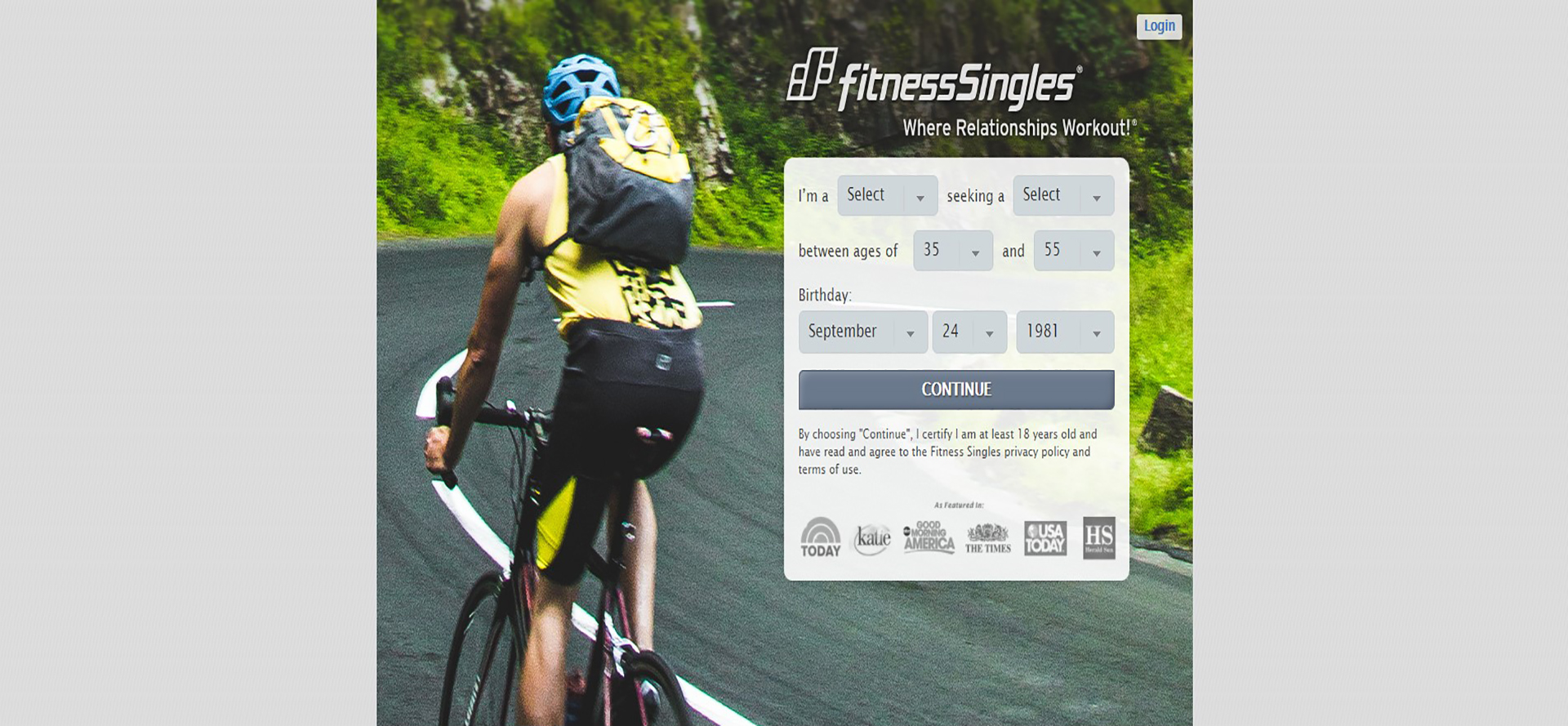
Signup is quick but wordier than the apps you're used to. Username, password, email, then a personal details block — age, location, height, body type, relationship goals. After that you answer a set of multiple-choice questions with a "Rather Not Say" option on most of them, and you pick at least three activities you enjoy. Start to finish it took me about eight minutes with photo uploads. One thing worth noting: you can't browse anything at all until your profile exists. No window shopping first.
Profile quality is the site's real strength. Because the signup forces more detail than a standard app, most profiles I opened had actual content — a short bio, activity tags, lifestyle answers, several photos. I'd guess 70% of the profiles I clicked had something written in the bio field, which is far better than the "hey" wastelands of mainstream apps. People here tend to be specific: marathon times, gym schedules, which trails they ride. That gives you real openings for a first message instead of guessing.
Activity levels are the mixed part. In and around big metros there are people online at almost any hour — a search of active daters around New York City gave me pages of profiles with recent logins. Outside those areas it thins out fast. When I widened the radius to 100 miles in a mid-sized Midwestern market, the same 30-odd faces kept cycling through, and a chunk of them hadn't logged in for months. There's no clear "last active" badge on every profile, which is one of my bigger complaints — you can't easily tell a live account from a ghost until you've spent money messaging it.
The interface is functional and dated. It loads fast, nothing broke during our testing, and getting around is simple. But it looks like a site designed a decade ago and gently updated since. The other annoyance is the upselling: free users hit "upgrade to reply" prompts constantly, and a few of them appear right after a new message notification, which feels engineered to sting. It works, I'm sure. It also got old within two days.
One pleasant surprise — the demographic spread is wider than I expected. It's not all 25-year-old CrossFit devotees. Plenty of members are in their 40s and 50s, often divorced, often looking for a second shot and a walking partner at the same time. Some people also use the site purely to find a training buddy rather than a date, which is stated openly on some profiles. If you want something more specifically values-driven, there are also communities built around shared beliefs and lifestyle, and the same goes for other niche corners like faith-focused dating communities.
Safety, Verification and Fake Profiles on Fitness Singles
Fitness Singles is a legitimate business, not a scam operation. It's been running for over two decades under an established parent company, the billing is transparent about renewal terms if you read the checkout page, and there's real customer support behind an email form. Our Lovezoid experts saw no sign of the classic red flags — no fake "someone winked at you" blasts within minutes of signup, no obvious bot messages designed to force an upgrade.
Profiles go through a review process, and photos are checked before they go live. That catches the laziest fakes. What it doesn't catch is the more careful romance scammer, and I did come across two profiles in a month that felt off — model-quality photos, thin bios, and an immediate push to move the conversation to a messaging app. That rate is low compared with what you'd see on a big free platform, but it isn't zero. The rules haven't changed: don't move off-site quickly, don't send money to anyone for any reason, reverse image search anything that looks too polished, and take a video call before meeting.
Privacy controls are decent but not deep. You can block members, hide parts of your profile, and control who sees your photo gallery, since gallery access is tied to paid membership anyway. What's missing is a full incognito browsing mode and per-photo privacy settings, both of which are standard elsewhere now. The site also asks for a fair amount of personal detail during signup, so think about how much you want in a public-facing bio — first name only, no employer, no gym name and schedule combined.
Complaints I found in user reports mostly cluster around three things: the price of the one-month plan, auto-renewal charges people didn't expect, and inactive profiles still showing in search results. All three are fair criticisms and all three are things you can partly manage yourself. On the health and honesty side, if you're managing a condition and want a space where that's handled upfront, there are also dating communities built for people with STDs, and more general free platforms for meeting locals if paying isn't an option right now.
Final Verdict on Fitness Singles
Fitness Singles earns roughly a 3.5 out of 5 from me. It does one thing genuinely well — putting active people in front of other active people, with enough profile detail that you know what you're looking at before you say hello. It's held back by pricing that's too high at the monthly tier, no real mobile app, an aging interface, and a member pool that gets thin outside major metros.
- Use it if you're in or near a big U.S. city, your training schedule is non-negotiable, and you want a partner who gets that instead of tolerating it.
- Look elsewhere if you live somewhere rural, you want app-first swiping with push notifications, or $40 a month for one month feels like too much of a gamble.
- Best value is the six-month plan at about $15 a month — check for a holiday coupon first and switch off auto-renewal on day one.
- Legit, not perfect: real people, real moderation, low but not zero scam risk, and some stale profiles cluttering search.
Run a free search in your ZIP code before you spend a cent — if you count dozens of recently active people who match your activities, it's worth trying; if not, the comparison table above will serve you better.
FAQ
How can I tell if the profiles on fitness dating sites are real or just inactive accounts?
Look at activity signals rather than photo quality: recent login dates, multiple photos in different settings (gym, trail race, hiking trip), and specific details like a favorite lifting program or a 10K time. Fitness-focused niche sites tend to have smaller member pools than mainstream apps, so a real problem is stale profiles from people who joined years ago and never deleted their account. If someone's bio is one vague line and their only photo is a shirtless mirror selfie with no context, treat it with caution.
What does a fitness dating membership actually cost once the free trial is over?
Most specialized fitness platforms charge roughly $25–$40 per month for a one-month plan, dropping to about $12–$20 per month if you commit to three or six months upfront. Free accounts usually let you create a profile and browse, but messaging is locked behind payment, which is the main frustration people report. Also check whether your plan auto-renews — it almost always does, and cancellation has to be done in your account settings before the renewal date.
How long does it usually take to get a first date from a fitness dating site?
Expect a few weeks rather than a few days, especially outside major metro areas. Because the member pool is narrower, matches come in more slowly than on mainstream apps, but conversations tend to go further since you already share a lifestyle. Sending 8–10 personalized messages a week, and widening your distance filter to 50–100 miles if you're in a smaller city, makes a noticeable difference.
Is it worth paying for a fitness-specific site when free mainstream apps exist?
It's worth it if training is a non-negotiable part of your life and you're tired of filtering for it manually. On mainstream apps you'll get far more matches but spend energy sorting out people whose idea of "active" is a weekend walk. On a niche fitness platform you get fewer profiles with much better lifestyle alignment — the trade-off is volume for relevance, so a smart move is running one of each at the same time.
What are the safety rules for meeting someone for a workout date instead of coffee?
Keep the first meetup in a public, staffed location — a busy gym, a popular park loop, or a group class — never a private home gym or a remote trailhead. Drive yourself, tell a friend the location and time, and share your live location during the meetup. Also avoid revealing exactly which gym you belong to or your regular running route until you've met and trust the person, since that information makes you easy to find.
How do these sites work for someone who's a casual gym-goer and not a competitive athlete?
They work fine, but you should be upfront about your fitness level in your profile to avoid mismatched expectations. Plenty of members are recreational — yoga, hiking, weekend cycling, three gym sessions a week — not just marathoners and powerlifters. Listing your actual activities and how often you do them attracts people at a similar level and saves you from dates where you feel judged or outpaced.