



The most common mistake people make on Dateyou is buying a big coin pack in the first ten minutes, before they've found out whether anyone actually answers. That single decision is the difference between spending five dollars on a test and ninety-nine on regret. So here's the short version of this Dateyou review: it's a real, working, pay-as-you-go dating site with plenty of profiles and a genuinely simple interface, but the coin system makes conversation expensive, and the thin profiles make it hard to tell who's worth your coins. It suits curious, casual daters who like chatting and don't mind paying per message. It's a poor fit for anyone who wants a monthly subscription, deep matching, or a polished mobile app.
Worth signing up free first and reading a few profiles before you spend anything — registration costs nothing and tells you more than any screenshot.
What is Dateyou?
Dateyou is a general-purpose online dating site aimed at singles looking for anything from casual flirting to a serious relationship. It's been around for several years and claims over a million members across its network, with a noticeably male-heavy user base. The site says it welcomes straight and LGBTQ+ daters alike, though in our testing the overwhelming majority of active accounts were straight. It's not built around niche interests — there's no BDSM community, no married-dating angle, no swinging scene. Dateyou is fully available in the USA, works in any browser, and takes about three to five minutes to join. As of 2026 there's still no native iOS or Android app, only a mobile-friendly version of the website.
The Pitch Versus the Product
Dateyou's marketing leans on three ideas: a huge member base, easy communication, and a site that's simple enough for anyone. Two of those hold up. The third depends entirely on how you define "easy."
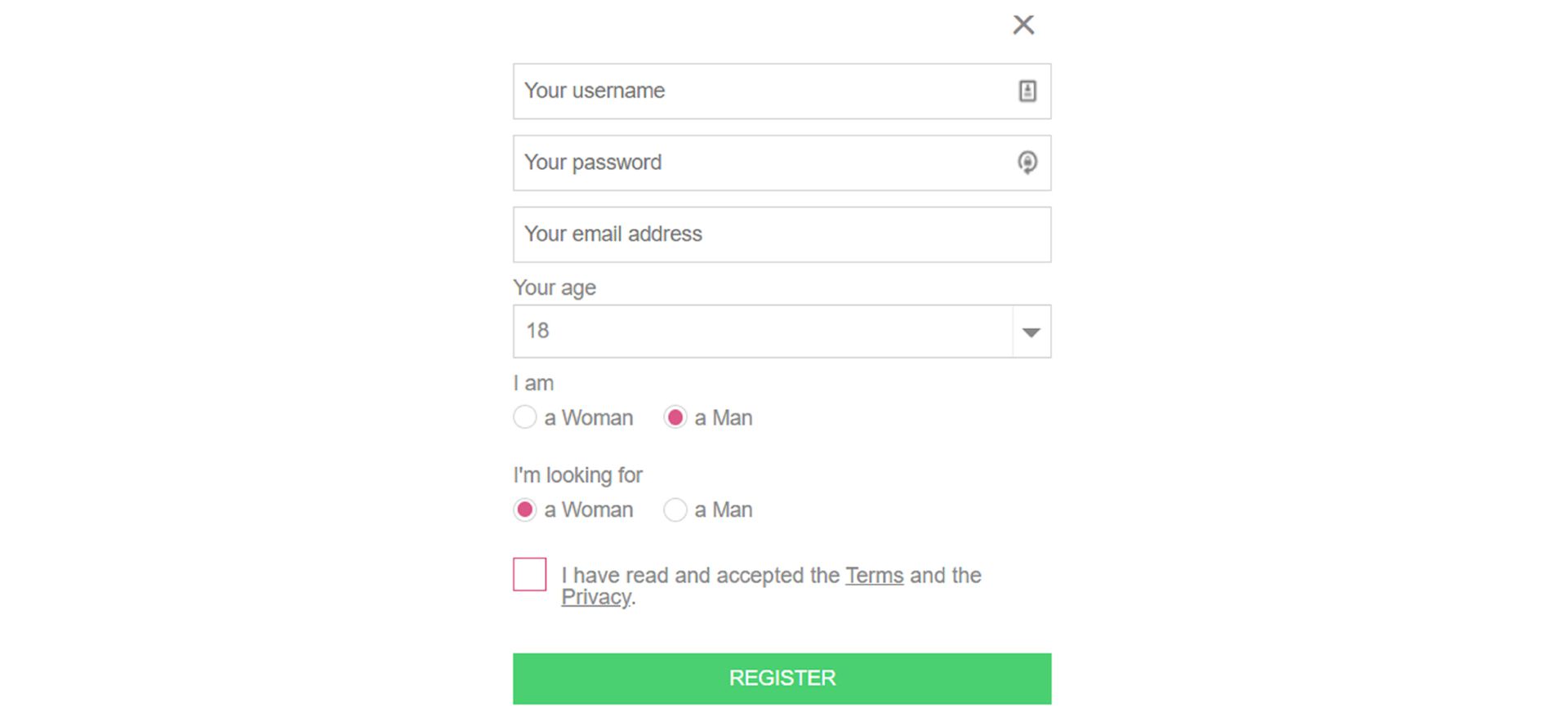
The sign-up page is refreshingly short. Username, age, email, password, confirm password, verify your inbox, and you're in. No 100-question personality quiz, no compatibility scoring, no waiting for approval. Lovezoid's review team appreciated that speed — a lot of platforms make you work for twenty minutes before showing you a single face. Dateyou shows you faces immediately.
But the flip side arrived fast. Because the barrier to entry is so low, the quality of what's behind those faces is uneven. You can fill out interests, relationship status, body type, language, profession, education, height, whether you have kids, and whether you drink or smoke — and many members simply don't. Worse, Dateyou allows only one profile photo. One. So you get a single image, often heavily filtered, and a handful of one-word answers. That's the entire basis for deciding whether to spend real money on a message.
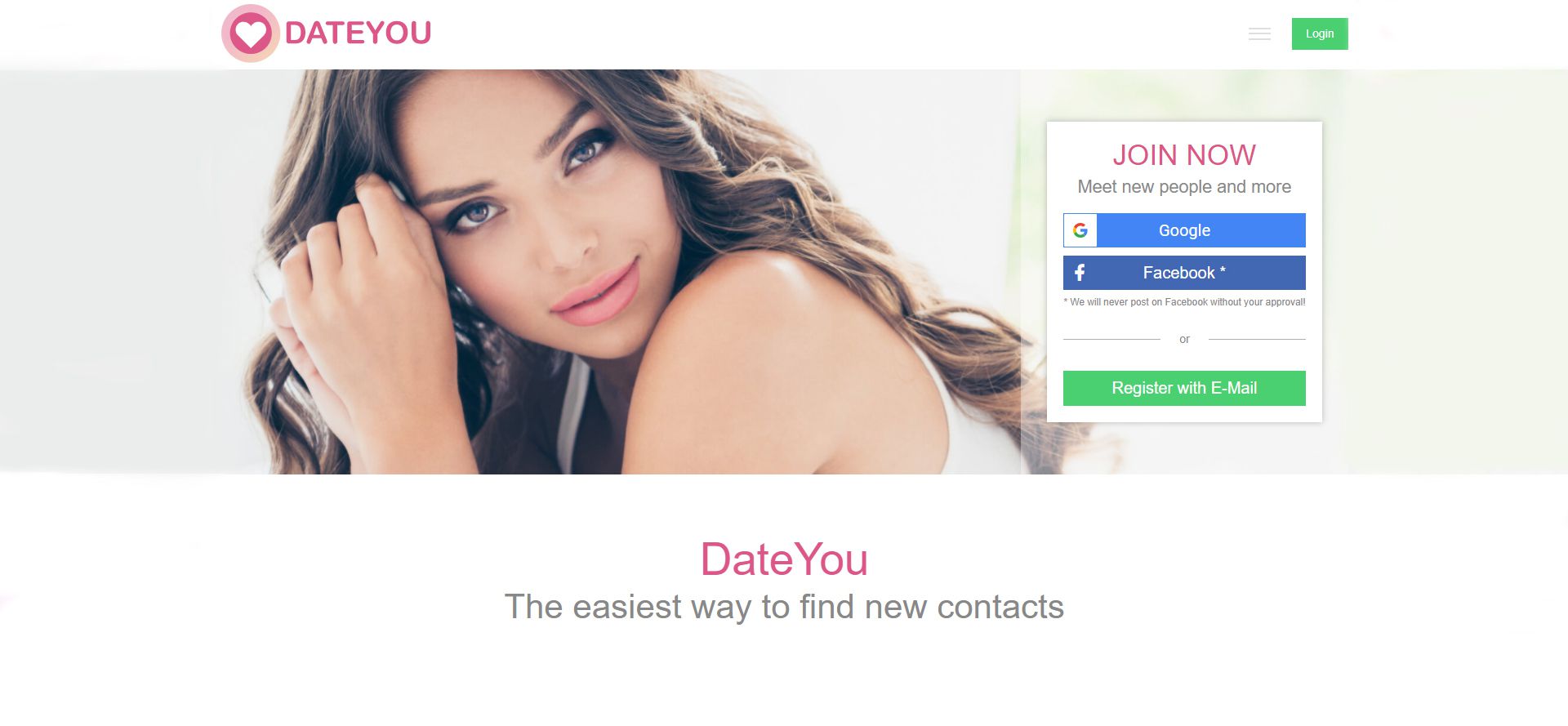
The promise of "easy communication" is where the pitch and the product part ways. Dateyou gives you three tools: text messages in the chatbox, virtual gifts, and "kisses" — its version of a like. Kisses are free. Everything else runs on coins. So the site is easy to use and expensive to use at the same time, which is an unusual combination and the main thing you need to understand before joining.
Putting Dateyou to the Test
Our Lovezoid experts spent several weeks on Dateyou, from a US-based account, sending kisses, reading profiles, and paying for messages to see what came back.
Activity levels were better than expected. Log in during evening hours in the US and there are consistently people online — the "online now" listings weren't empty, and profile views on our test account started arriving within an hour of joining. Some of that traffic is genuine curiosity. Some of it is clearly automated attention designed to make a new user feel popular. Both things are true at once, and telling them apart is the skill you need on this site.
Kisses are the honest signal. Because they're free, they tell you nothing about intent — but because they're free, you can send a lot of them and see who responds by looking at your profile or sending one back. We used kisses as a screening tool: kiss twenty profiles, see which five come back and look at you, then spend coins only on those five. That approach roughly tripled our reply rate compared with messaging people cold.
The matching system is the weakest part of the product. There isn't really an algorithm here in any meaningful sense. You get search and browse, filtered mainly by age, location, and a few physical or lifestyle traits. There's no compatibility percentage, no personality-based suggestions, no daily curated list. If you want a site that studies your answers and hands you people who think like you, you'll be happier on platforms built around personality matching. Dateyou expects you to do the sorting yourself.
Message quality varied wildly. Roughly a third of the replies we paid for were clearly written by someone real — specific, referencing our profile, asking follow-up questions. Another third were generic openers that could have been copy-pasted to fifty men ("hi handsome, what are you doing tonight?"). The rest went nowhere at all. Is a one-in-three hit rate acceptable when each message costs money? That's the question this entire review comes down to.
On the technical side, Dateyou is plain but stable. Tabs are labeled clearly, nothing is buried three clicks deep, and pages load quickly. The mobile browser version keeps all the same features, so you're not locked out of anything on your phone. That said, no dedicated app means no push notifications, no camera integration, and a layout that feels stretched on a small screen. Typing long messages on mobile is a chore, which matters when every message costs you.
The genuine annoyance for us was the upsell rhythm. Run low on coins mid-conversation and the site interrupts you to top up. It's not deceptive — the price is right there — but being asked to pay while you're in the middle of a good chat is a pushy design choice, and it happened often enough to sour the experience.
The Real Cost of Coins
Here's where Dateyou needs the clearest explanation, because it doesn't work like a normal dating subscription.
Registration is free. Browsing profiles and viewing photos is free. Sending kisses is free. New members get a trial allowance of about 100 coins. That sounds generous until you learn a single chat message can cost up to 50 coins. So your welcome gift is roughly two messages.
Coin packs run around $4.99 for 220 coins, $9.99 for 440, $24.99 for 1,110, $49.99 for 2,200, and $99.99 for 4,400 — about two cents per coin at every tier, so bulk buying gets you volume, not a discount. Do the math at 50 coins per message and the $4.99 pack buys you roughly four messages. Around $1.25 per message sent. Virtual gifts are extra and priced separately.
Let that number sit for a second. A real back-and-forth conversation — say fifteen messages from your side before you swap numbers — costs somewhere in the neighborhood of $18 to $20 with one person. Talk to three people at once and you're spending more than most monthly dating subscriptions in a single week, with no cap.
Is premium worth it? Our verdict is a conditional yes, with tight discipline. Pay-per-message actually rewards selective, patient users. If you send five well-written messages to five carefully screened profiles, the $4.99 pack is a cheap experiment — cheaper than a month's subscription elsewhere. If you're a scattershot messager who opens twenty conversations to see what sticks, Dateyou will empty your wallet faster than any flat-rate site. There's also no autopay trap here, which is a real plus: you're not fighting a recurring charge, you just stop buying coins. We found no active promo codes or bonus coin offers during our 2026 testing, so don't wait around for a discount that may never come.
If paying per message feels wrong to you, that's a legitimate reaction — plenty of daters prefer free swipe-based apps where messaging costs nothing and accept the trade-off of shallower profiles.
Safety, Privacy, and Real Risks
Dateyou verifies your email address at sign-up and nothing else. There's no photo verification, no ID check, no phone confirmation. That's the honest picture, and it's the site's biggest weakness. Combined with the one-photo limit and minimal required profile details, it means a fake account takes about ninety seconds to create.
Did we run into scam behavior? Yes — the standard patterns. A couple of accounts pushed hard to move the chat to an outside messaging app immediately. One profile had a photo that reverse-image-searched to a stock modeling portfolio. Nobody asked us for money outright during testing, but the setup for that kind of approach was visible. This isn't unique to Dateyou; it's the reality of any platform with free registration and no photo checks. It just means you have to do the verifying yourself.
Practical protections we'd recommend: never send coins or gifts to someone who won't answer a specific question about their own profile, ask for a live video call before meeting, and don't share your workplace or full name early. Privacy controls on the site are basic — you can block users and report profiles, and both work — but there's no incognito browsing, no way to hide your profile from search while staying logged in, and no granular control over who sees your photo. Payments are handled through standard processors and appear on statements under a billing descriptor rather than the site name, which some users will appreciate.
Who does Dateyou genuinely suit? Men and women in their late twenties through forties who enjoy the flirting stage, want a low-commitment way to chat with new people, and would rather pay small amounts occasionally than commit to a monthly plan. It also works reasonably well for people in mid-size US cities where bigger apps thin out. Who should skip it? Anyone over fifty looking for a peer group will have better luck on sites designed for daters over 50. Anyone who wants serious, marriage-track matching should look for compatibility-driven platforms instead. And if your interest is arrangement-style dating with clear expectations, Dateyou isn't structured for that at all. (It also isn't the place for BDSM, swinging, or married dating, despite what some other reviews online claim.)
Final Verdict on Dateyou
Dateyou earns a middling score from us — competent and legitimate, but limited and priced in a way that punishes casual browsing. It's not a scam. It's also not a bargain. It's a straightforward flirting site with a meter running.
- Legit, not a scam — real members, working features, no forced recurring billing, but no photo or ID verification either.
- The cost is the story — at roughly 50 coins per message and two cents per coin, expect about $1.25 per message and around $20 per real conversation.
- Free tools are the smart play — use kisses and profile views to screen people first, then spend coins only on those who show interest back.
- Best for selective casual daters — skip it if you want deep matching, a real mobile app, or unlimited messaging for a flat monthly fee.
If pay-per-message suits how you date, start with a free account and the smallest coin pack before you commit anything more — and if that model isn't for you, the comparison table above lists platforms that charge a flat rate instead.
FAQ
Are the profiles real, or is it mostly bots and paid chat operators?
Most profiles on smaller dating platforms like this one are real people, but you should expect a noticeable share of inactive accounts and some fake ones. The red flags are consistent: a stunningly attractive stranger messages you within minutes of signing up, replies feel generic, and the conversation never moves to a video call. If someone refuses a quick video chat after a week of talking, treat that as your answer.
How much does it really cost once the free signup ends?
Expect roughly $20-$40 per month for a single month, dropping to about $10-$20 per month if you prepay for three or six months. The free tier usually lets you create a profile and browse, but sending or reading messages is the paywall. Check whether your plan auto-renews at the full monthly rate — that's where most complaints come from, not the initial price.
Is a smaller dating platform like this better than mainstream swipe apps?
It depends entirely on what you're optimizing for. Mainstream apps give you far more people in any given US city, so if you live outside a major metro, the bigger apps will simply have more active users near you. Smaller platforms tend to attract people who are more deliberate about dating and less likely to be endlessly swiping, but you may wait days between quality matches instead of hours.
How long before I actually get a date, and is it safe to meet up?
Realistically, plan on two to four weeks of consistent messaging before a first date, and understand that many conversations will fade before that. When you do meet, stick to public places, drive yourself or arrange your own ride, and tell a friend where you'll be. Never send money to anyone you've met online, no matter how convincing the emergency story sounds — that's the single most common way people get burned.