



Yes, Zoosk is a legitimate dating site with real people on it — but whether it's worth your money depends entirely on how much you like being matched by an algorithm that watches what you click. After several weeks of testing, our verdict is that Zoosk works best for daters aged roughly 28 to 50 who want something between casual and serious, who don't mind swiping through a lot of profiles, and who are willing to pay to actually send messages. Skip it if you hate paywalls, want deep personality questionnaires, or expect a small, hand-curated pool of matches.
This Zoosk review is based on hands-on use of both the desktop site and the mobile app in the USA, with a free account first and then a paid subscription so we could see what's behind the wall.
What is Zoosk?
Zoosk launched back in 2007, founded by Alex Mehr and Shayan Zadeh, and it has been through more changes than most dating platforms still standing. It claims over 40 million registered members across 80 countries and support for around 25 languages, and it was acquired by Spark Networks in 2019. It's fully available in the USA, with a strong user base in larger metro areas, and it markets itself to people looking for relationships of all kinds — dating, serious commitment, or something looser. The hook that separates it from the crowd is its behavioral matchmaking engine, which learns from your actions rather than only from what you say you want.
Our First Week Inside Zoosk
Signing up took under three minutes. Zoosk asks for your gender, who you're interested in, birth date, location, email and a password, and you can shortcut the whole thing with a Google or Facebook login. There's no long questionnaire, no essay prompts, no 100-question personality test. That's a plus if you hate paperwork and a minus if you want the site to really understand you before it starts throwing faces at you.
Within an hour of finishing our profile, the notifications started. Views, likes, "someone is interested in you" pings. Some of that is real activity — Zoosk genuinely has a lot of people logging in, and we consistently saw fresh online indicators at 9pm on a weekday in a mid-size US city. But some of it is clearly engineered to make a new free account feel wanted so you'll pull out a card. Our Lovezoid review team has seen this pattern on plenty of freemium platforms, and Zoosk leans into it harder than most.
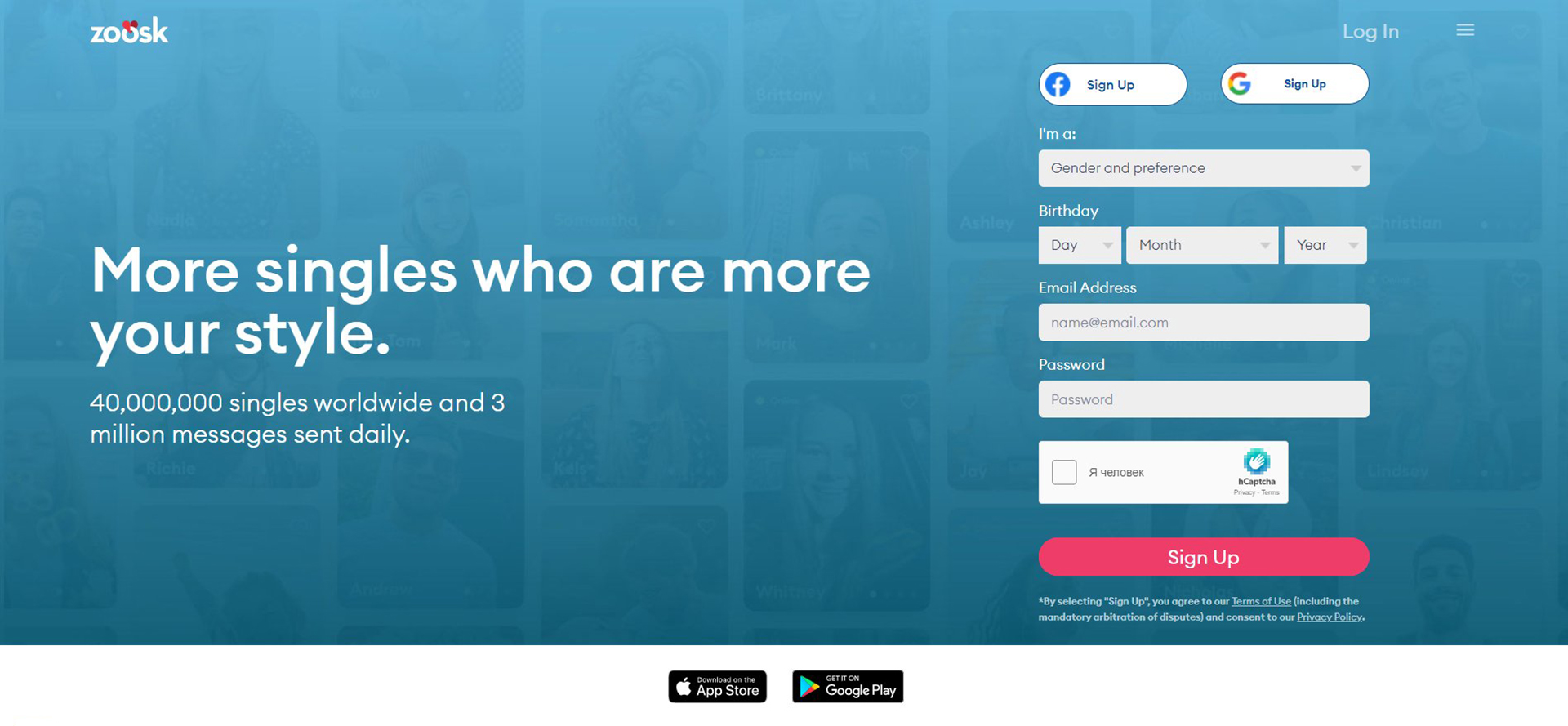
The interface itself is clean and easy to figure out. The main navigation is simple: Carousel for rapid yes/no browsing, Search for filtered browsing, Views, Connections, and Messages. Nothing is buried. Profile quality is mixed and depends heavily on the person — Zoosk lets people fill in a lot of detail (height, education, kids, smoking, religion, what they're looking for), but because sign-up doesn't force it, plenty of profiles are three photos and one sentence. The better profiles are genuinely informative. The lazy ones are very lazy.
The most annoying part of week one wasn't the profiles. It was the interruptions. Try to read a message and you get an upsell screen. Try to see who viewed you and you get an upsell screen. Coins get dangled at you for boosts and gifts, on top of the subscription you may already be paying for. It's a two-currency system, and it feels like it.
Free accounts also can't reply to messages, which creates a frustrating loop: someone messages you, you see they messaged you, and you can't answer. That's the business model working as intended, but it's worth knowing before you invest emotional energy.
The Machinery Behind the Matches
Zoosk's centerpiece is its Behavioral Matchmaking engine. Instead of just filtering on your stated preferences, it tracks which profiles you open, who you like, who you skip and who you message, then adjusts what it shows you. In practice, this worked better than we expected — by day five, the Carousel was showing a noticeably more consistent type of person than it did on day one. If you're honest with your clicks, it learns fast.
The flip side is that it can lock you into a bubble. If you happen to like a few profiles in the same narrow bracket early on, Zoosk keeps feeding you variations of that, and it's hard to reset. Manual search helps, but the filters are limited on a free account — you get basics like age, distance and gender, while deeper filters such as body type, ethnicity, education and lifestyle habits are gated behind a subscription. Anyone who dates with specific criteria will feel that limitation quickly.
SmartPick is the other named feature: daily curated suggestions based on your behavior and mutual compatibility signals. It's a nice daily ritual, similar to a "top picks" list, though the volume is small and the quality varies. Communication tools are straightforward — likes, winks, messages, and virtual gifts bought with coins. There's no video chat, no voice notes, no icebreaker prompts, which feels dated in 2026 compared to what newer apps offer. Read receipts are available with premium, and honestly, that single feature saved us time; knowing a message was seen and ignored is more useful than staring at silence.
The mobile app is the stronger experience. It's been around for over a decade and it shows in the polish: fast loading, stable, push notifications that actually arrive, and the Carousel feels more natural with a thumb than a mouse. Battery drain was normal and we hit no crashes on iOS during testing. If you're the kind of person who prefers quick swipe-first browsing, the app version of Zoosk will feel familiar right away.
Where Your Money Actually Goes
Let's be blunabout the free tier: it's a showroom, not a car. You can create a profile, upload photos, browse, use the Carousel, send likes and see that people are interested in you. You cannot read and reply to messages freely, you can't see who viewed your profile, and you can't use the advanced filters. Zoosk gives you just enough to feel the momentum and then stops you.
Zoosk Premium pricing in the USA at the time of our testing looked like this: about $29.95 for one month, $59.95 for three months (roughly $20 a month), and $74.95 for six months (roughly $12.50 a month). That's in line with the industry — not cheap, not outrageous. The one-month plan is poor value; if you're going to pay, the three-month plan is the sensible middle ground, and six months only makes sense if you're genuinely committed to using it several times a week.
What premium actually unlocks:
- Unlimited messaging with any member, plus read receipts on what you send
- Seeing everyone who viewed your profile and connecting with them
- Full search filters and unlocked Carousel matches
- Profile boosts and the ability to send gifts (some of these still need coins)
Then there are Zoosk coins, sold separately, used for boosts, gifts and unlocking certain extras. Paying a subscription and still hitting a coin wall is the single most irritating thing about the platform, and it's the complaint we'd flag hardest in this Zoosk review. Promo codes and seasonal discounts do exist and are worth hunting for before you buy — Zoosk also tends to offer a discounted first term if you let a trial lapse.
Is premium worth it? If you're in or near a US city with real activity and you plan to message people regularly, yes — because without it you literally cannot hold a conversation. If you're in a rural area with thin local numbers, run the free account for a week first and count how many active, plausible profiles are within your radius. If the answer is a dozen, don't pay. Worth trying with a free account before you spend anything.
Can You Trust Zoosk?
Zoosk is not a scam. It's an established, corporate-owned platform with a payment trail, real customer support and over a decade of operating history. That said, "legit company" and "no fake profiles" are two different things.
On the plus side, Zoosk introduced Photo Verification back in 2014 — you take a video selfie, staff or software compare it to your photos, and verified users get a badge. It's optional, which weakens it, but verified profiles were noticeably more trustworthy in our testing. The Insignia feature, launched in 2018, verifies military status to fight "stolen valor" claims, which is a specific and genuinely useful touch that few platforms bother with.
Still, our Lovezoid testers encountered a handful of suspicious accounts: brand-new profiles with one glamour photo, generic openers, and quick pushes to move the conversation to another messaging app. That's the classic romance-scam script. Zoosk's reporting tool works and we saw accounts disappear after reporting, usually within a day or two, but the burden is on you to spot them. Rough estimate from our testing: a small but non-zero share of inbound interest was junk — enough to stay alert, not enough to ruin the experience.
Privacy controls are decent but not best-in-class. You can hide your profile from search, block individual users, and control notification settings. What you can't do is browse invisibly on a standard account, and there's no way to hide your online status. Billing is the other recurring complaint you'll find in US user reviews: subscriptions auto-renew, and people who forget to cancel get charged. Cancel through your account settings (or through the App Store if you subscribed there) before the renewal date and you'll avoid the headache.
If Zoosk's approach doesn't sit right with you, there are alternatives with different philosophies — some daters prefer answering detailed compatibility questions, others do better on platforms designed for the over-50 crowd, and there's also a market for location-based casual meetups or even clearly defined arrangement dating. Check the comparison table above to weigh those against Zoosk.
Final Verdict on Zoosk
Zoosk earns a solid but not spectacular rating from us. It's legitimate, the app is well built, the behavioral matching genuinely improves the more you use it, and the user base in US cities is large enough that you'll have people to talk to. The downsides are real too: aggressive upselling, a coin system layered on top of a subscription, limited free functionality, no video or voice features, and enough sketchy profiles that you need to keep your guard up. It's a numbers-and-momentum platform, not a slow, thoughtful matchmaker.
Use it if you're a US dater in your late twenties to fifties who wants volume and speed, likes browsing on a phone, and is fine paying around $20 a month for messaging. Look elsewhere if you want depth-first matching, hate paywalls, or live somewhere with a thin local pool. Registration is free and takes three minutes, so the smartest move is to make an account, check the activity in your area for a week, and only then decide whether premium is worth your money. Try it free and see if it works for you.
FAQ
How can I tell whether the profiles here are real people or fake accounts?
Most active profiles on large mainstream platforms like this one belong to real people, but you will still run into a share of inactive accounts and scam attempts. The clearest signals are photo verification badges, profiles with several candid photos rather than one glamour shot, and members who answer specific questions about your messages. Treat anyone who pushes you to move to text or messaging apps within the first few exchanges as a red flag, especially if money or crypto comes up.
What does it actually cost once the free features run out?
Expect roughly $30 to $40 for a single month, dropping to around $15 to $20 per month if you commit to three or six months. There is also a separate in-app currency system for boosts and virtual gifts, which is optional but easy to overspend on. Subscriptions renew automatically by default, so turn auto-renew off in your account settings the day you sign up if you only want one billing cycle.
How long does it usually take to go from signing up to an actual date?
Realistically, most people need two to four weeks of consistent activity before a first date happens. The matching engine learns from who you click on, so the first few days often produce mismatched suggestions that improve once you have swiped through a hundred or so profiles. Users in large metro areas see results much faster than those in rural counties, where the local pool can be a few hundred active members at best.
Is it worth paying for a subscription instead of sticking with free apps?
It is worth it if you actually want to send messages, because the free tier here is mostly browsing and passive interest signals. The trade-off compared to free swipe-based apps is a slightly older, more relationship-oriented crowd and less pressure to be witty in a two-line bio. If you tend to sign up and then ignore an app for weeks, a paid month will feel wasted, so start with the shortest plan and see how much you use it.
What kind of person is this platform actually a good fit for?
It suits singles roughly 28 to 55 who want something more serious than casual swiping but do not want the long personality questionnaires of matchmaking-heavy sites. Because it is a broad mainstream platform rather than a niche site, you will find people looking for marriage sitting alongside people who just want to date around, so being explicit in your profile about your goals saves a lot of wasted messaging. If you belong to a specific community with strong dating priorities, such as faith or a particular lifestyle, a specialized platform will filter better than this one does.