





The most common mistake people make with Cupid is buying a six-month subscription on day one, before checking whether anyone in their own city is actually logging in. That single decision is the difference between a site that feels alive and a site that feels like a waiting room. So here's the fix, and here's our verdict up front: Cupid is a legitimate, long-running dating site with a genuinely good free tier for browsing — but its activity is uneven by region, and you should spend at least three or four days on a free account confirming there are real, recently-active people near you before you pay a cent. It's best for people in mid-size and large U.S. metros who like search filters and slow, message-based dating. Skip it if you want swipe-speed matching, a polished app on Android, or a crowd under 25.
Worth setting up a free profile first — registration costs nothing and takes about four minutes, which is all the time you need to judge whether your area has a pulse.
What Is Cupid, Exactly?
Cupid has been running since 2002, which makes it older than most of the apps on your phone. It's a general-interest, worldwide dating platform — not niche, not age-restricted, not built around one intention — with millions of registered accounts globally and a decent U.S. presence. The site is fully available to users in the USA, in English, with pricing in dollars. It leans deliberately toward a social-network feel rather than a swipe app: you pick a username instead of showing your legal name, profiles are text-heavy, and there are public chat rooms alongside private messaging. Our Lovezoid review team tested it for several weeks in 2026 using two accounts (one male, one female) in different states, and this Cupid review is based on what those accounts actually saw — not on the site's own marketing copy.
What the First Two Weeks Felt Like
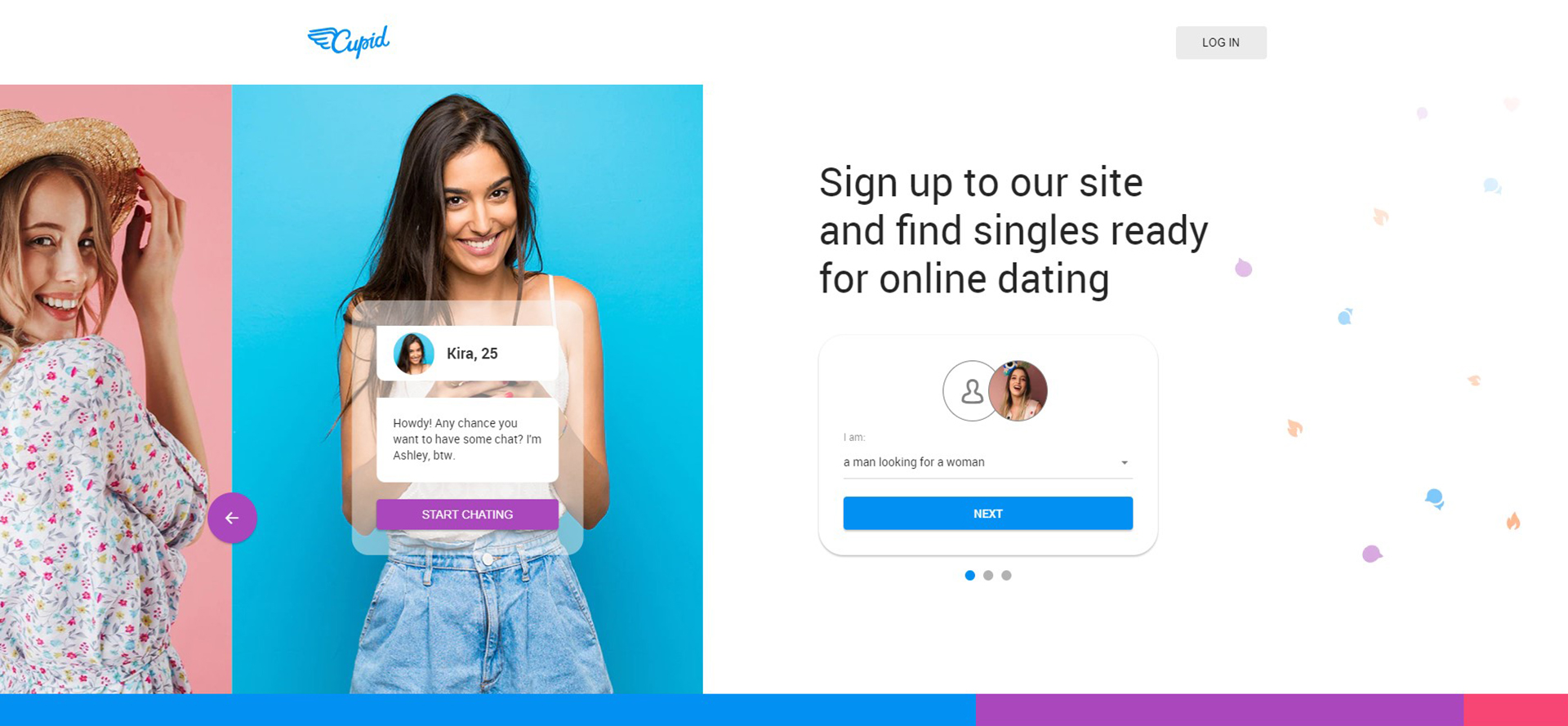
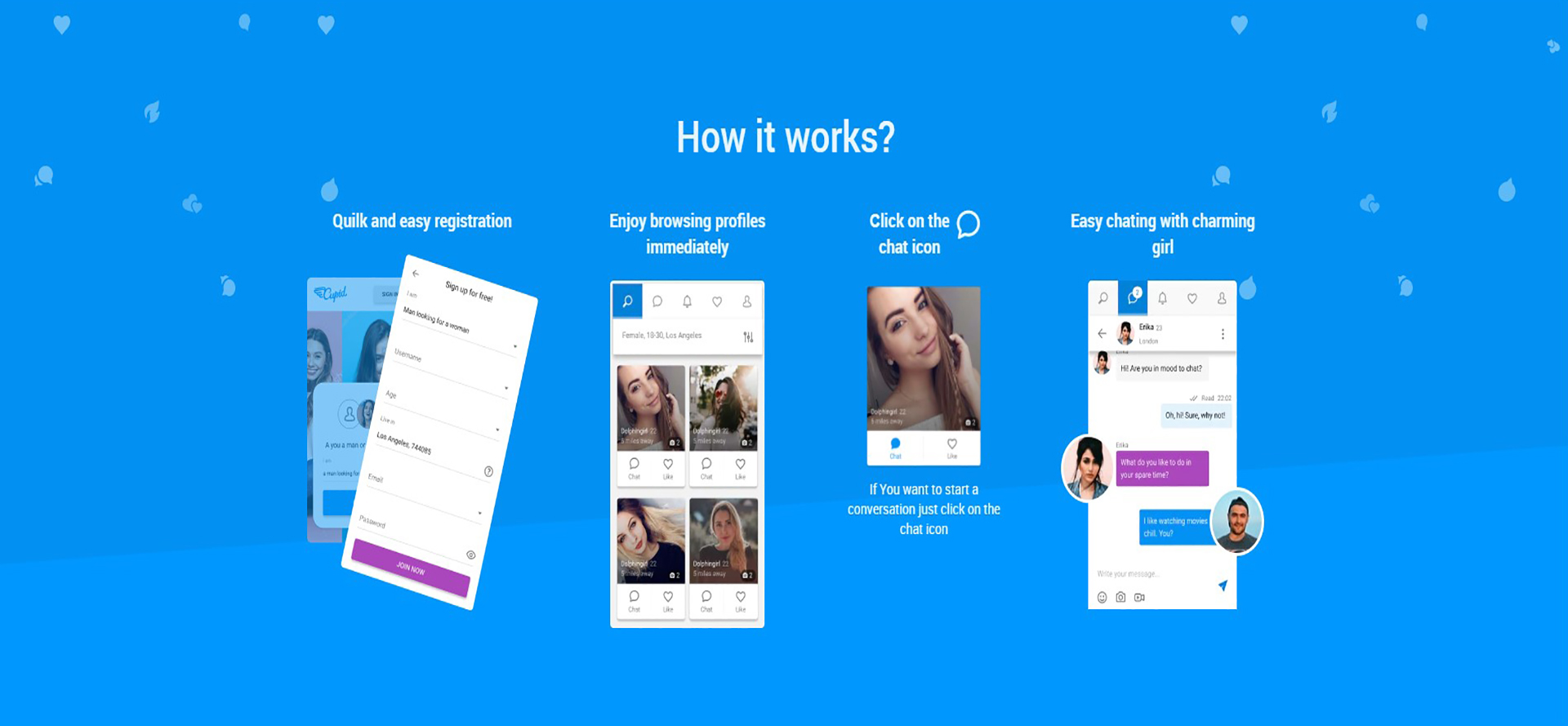
Sign-up is refreshingly short. Email, username, password, gender, who you're looking for, age, location — done in under five minutes, no photo required to get inside. That last part cuts both ways: it's convenient, but it also means you'll scroll past a fair number of photo-less profiles, which is the first small frustration.
Once inside, the layout hits you as functional rather than modern. Think clean rows, boxy buttons, a left-hand menu, and a color scheme that hasn't changed much in years. It isn't ugly, but it looks like a website from a decade ago rather than a 2020s app. On the plus side, everything is where you'd expect it, nothing is hidden behind three taps, and the search page loads fast even on a weak connection.
Profile quality was better than we expected. Because the registration flow asks a lot of small questions — body type, smoking, drinking, kids, education, what you're looking for, plus open text boxes — the average completed Cupid profile tells you more than a two-line app bio ever will. Roughly two-thirds of the profiles our testers opened had at least a paragraph of real writing. That makes opening messages much easier to write, and it makes filtering easier too.
Activity is the honest weak spot, and it depends heavily on where you live. Here's what our two accounts logged across two weeks:
- Large metro (Houston area): 300+ profiles within 30 miles showing activity in the last 7 days, and a steady trickle of new likes daily.
- Small city (population under 150,000): fewer than 60 recently-active profiles within 50 miles, and most of the same faces reappearing in search.
- Female test account: 14 messages and 40-plus likes in the first 72 hours, some of them clearly copy-pasted.
- Male test account: 3 unprompted messages in two weeks; replies came from about 1 in 5 messages sent with a personalized opener.
- Overall reply rate improved noticeably when we referenced something specific from the person's profile — the text-heavy format rewards actually reading.
The single most annoying part of daily use is the upsell. Free accounts can browse, like, and send "winks," but the moment you try to open a message thread you hit a paywall banner, and those banners appear in the inbox, on profiles, and after most actions. It's not deceptive — you always know what's locked — but it gets tiring by day three. The other irritation: the online-now indicator sometimes shows people who were active hours ago rather than right now, so "online" is a softer signal here than it looks.
The Features Doing the Heavy Lifting
Cupid runs on four main tools, and they're worth understanding because they're not interchangeable.
Q-Match, the personality test
This is the optional compatibility questionnaire. It asks about temperament, habits, values and dealbreakers, and the more you answer, the more the site's algorithm has to work with. We found the match percentages more useful than random, but not remarkable — people who scored 90%+ with our tester weren't dramatically more responsive than people who scored 70%. The real benefit is indirect: answering the questions fills out your profile, and fuller profiles get more attention. If you like quiz-driven compatibility, there are other sites built entirely around answering questions that go deeper on the same idea.
LikeBook
This is Cupid's card-style discovery feed. You see one full profile at a time and choose to like it, message it, or move on. It's the closest thing here to swiping, but it shows far more information per profile than a photo-first app does, which slows you down in a good way. The downside: in thin markets you'll exhaust the local pool in a couple of sessions, and it starts recycling profiles.
Search
This is the feature that genuinely stands out. You can filter by distance, age, match level, whether the person is online, location, and whether they hold a paid upgrade — that last filter is a quietly excellent trick, because paid members can actually reply to you. Compared to modern apps that give you three sliders and call it a day, Cupid's search is a real tool. If you like being in control instead of waiting on an algorithm, this alone may sell you on the site.
Communication tools
Under each profile in search results you get three buttons: heart (like), smiley (a wink-style nudge) and chat. Winks are free and function as a low-effort ping; messaging is the paid feature. There are also public chat rooms, which are livelier than we anticipated but skew casual and a bit chaotic. And then there's Wingman Barney, an in-site assistant that nudges you with suggestions and prompts. It's a novelty more than a feature — mildly fun the first day, easy to ignore after that.
The app situation
Here's the biggest structural complaint in our testing: the official Cupid app is iOS-only. Android users get the mobile browser version, which works — it's responsive and includes every function of the desktop site — but there are no push notifications, so you'll miss messages unless you check manually. The iOS app itself mirrors the website closely and is fine, if plain. In 2026 shipping without an Android app is a real gap, and if you live on an Android phone, factor that in before subscribing.
Is Cupid Premium Worth Paying For?
Cupid is freemium, and it's honest about the split. Free accounts can register, complete a profile, take Q-Match, browse LikeBook, run full searches, and send winks and likes. What they can't do is the one thing that matters most: send and read actual messages. You'll also see only one photo per profile, and you can't see who viewed you or who liked you.
Premium unlocks:
- Unlimited messaging with any member
- All photos on every profile instead of just the main one
- The full list of people who viewed your profile
- The full list of people who liked you
- Higher visibility in search results and fewer upsell prompts
Pricing at the time of our testing was $23.99 for one month, $20.79 per month on the three-month plan, and $15.99 per month on the six-month plan. Prices can shift by region and promotion in the USA, and Cupid does run occasional discount codes and free-feature promotions, so it's worth checking for an offer before you check out rather than after.
Is it worth it? Conditionally yes. One month at $23.99 sits in the normal range for a messaging-based dating site, and if your local search shows a few hundred recently-active profiles, you'll get value out of it — the ability to message plus the "has upgrades" filter is a strong combination for actually starting conversations. The six-month rate is the only one that feels like a bargain, but it's also the riskiest, because you're committing before you know your reply rate. Our advice from testing: pay for one month, judge by how many replies you get in three weeks, then decide about a longer term.
Who shouldn't pay? Anyone in a rural area or small city where the free search already looks thin. No subscription creates people who aren't there. And if your inbox as a free user is already full of likes, that still doesn't guarantee replies — some of those likes come from accounts that never log in again. Isn't it strange how easy it is to mistake attention for interest? Spending a few days verifying before you upgrade costs nothing and saves the most common regret we hear about this site.
Safety, Verification and What We Found in the Inbox
Cupid is not a scam site. It's been operating since 2002 under a real company, it processes payments through standard billing systems, and it publishes clear terms and a privacy policy. The username-instead-of-real-name setup is a genuine privacy win — you can be active here without your full name being searchable, which matters more than people realize.
Verification exists but is light. You confirm your email and can verify contact details, and profiles that have gone through more of the process display more completely. What Cupid does not have is mandatory photo or ID verification, and that's the honest limitation. Without a selfie check, a determined fake account can get through, and we saw evidence of it.
Our Lovezoid testers flagged roughly 6 to 8 suspicious profiles out of every 100 browsed. The patterns were the usual ones: a single glamorous photo, a very short bio, an immediate request to move to an outside messaging app, or a sudden story about travel and money. That's not an unusual rate for a large international platform, and it's far from the worst we've seen — but it's not zero, and free users are more exposed because they can't read messages to spot the tells early. Reporting worked: the profiles we flagged were gone within a day or two in most cases.
The privacy controls are one of Cupid's better points. Safe Mode lets you restrict who can contact you — for example limiting messages to paid members only, which filters out a large share of throwaway accounts in one click. You can hide your profile from search, block individual users, and control photo visibility. Turn Safe Mode on during your first week. It cuts the noise dramatically and costs nothing.
Complaints we found consistent with our own experience: the frequency of upsell prompts, the missing Android app, subscription renewals that auto-continue unless you cancel in account settings (check that box before you buy), and uneven local activity outside big metros. Nothing here suggests dishonesty — it suggests an older platform that has kept its core working while letting some polish slide. Common sense still applies as it would anywhere: never send money, keep chats on-site until you're comfortable, and reverse-image-search a photo if something feels staged. The same caution applies on any platform, including sites focused on meeting singles in the Caribbean or connecting with Latina singles abroad, where distance makes verification even more important.
Final Verdict on Cupid
Cupid earns a solid mid-to-upper score from us — around 3.7 out of 5. It's legitimate, it's been around for over twenty years, the profiles carry real information, and the search tool is better than what most modern apps offer. The trade-offs are equally real: a dated interface, constant upgrade prompts, no Android app, light verification, and activity that ranges from busy to bare depending on your zip code.
Use it if you're an adult in a mid-size or larger U.S. city who prefers reading profiles over swiping photos, wants control over filters, and is comfortable paying for a month of messaging to test the water. It suits people looking for something between casual and serious, and it works well for anyone who writes decent messages, because effort visibly improves reply rates here.
Look elsewhere if you're in a small town with a thin local pool, if you're under 25 and expect app-speed matching, if you're an Android user who needs notifications, or if you want a specific niche. Those with different priorities may prefer platforms built around dating after 50 or, for a very different dynamic, arrangement-style dating sites. If Cupid isn't the right fit, the comparison table above lists our other recommendations.
Our bottom line after several weeks of testing: Cupid deserves a look, not a blind six-month commitment. Make a free account, run a search on your own city with the "online" and "active recently" filters, message-test for a few days with winks, and let the results decide. Registration costs nothing, and that first free week tells you more than any review can.
FAQ
Are the profiles on cupid-style dating sites real, or mostly fake?
Most are real, but these networks do attract a noticeable share of inactive accounts and scam profiles, especially on their international sections. A good rule of thumb: profiles with one glamorous photo, a nearly empty bio, and an instant "you're so beautiful" message are the ones to skip. Look for members with multiple candid photos, filled-out answers, and recent login activity before you invest time in a conversation.
How much does membership really cost after the free trial ends?
Expect roughly $25–$40 for a single month, dropping to about $10–$20 per month if you commit to a three-, six-, or twelve-month plan. The bigger gotcha is auto-renewal — most of these platforms renew silently at the end of the term, so cancel in your account settings the day you subscribe if you only want one cycle. Also watch for optional extras like profile boosts or "read receipts" that are billed separately.
Can I actually meet someone without paying anything?
Not realistically. Free accounts on these niche platforms usually let you build a profile, browse, and send limited "winks" or interest signals, but reading and replying to messages is almost always locked behind a paid plan. If you're only browsing to see who's in your area, free is fine; if you want conversations, budget for at least one paid month.
What are the warning signs that someone messaging me from overseas is a scammer?
The clearest red flags are fast declarations of love, refusing video calls, always having a reason they can't meet, and eventually a money request — a visa, hospital bill, phone card, or "stuck at customs" story. Reverse-image search their photos; stolen model or influencer pictures show up constantly. Never send money, gift cards, or crypto to someone you haven't met in person, no matter how long you've been chatting.
Why use a niche platform like this instead of a mainstream swiping app?
These sites suit people who want detailed profiles, search filters, and message-based conversations rather than fast swiping — which tends to appeal to daters over 35 and those open to long-distance or international matches. The trade-off is a smaller local member pool, so in mid-size and rural U.S. areas you may see fewer active people nearby than on a big free app. Many users run both: a mainstream app for local dates and a specialized platform for more specific preferences.