



Yes, Hily is a legitimate dating app with real people on it — but whether it's worth paying for depends almost entirely on how patient you are with a swipe-based feed and how much you dislike upsells. Our Lovezoid review team spent several weeks testing Hily on both iOS and Android in mid-sized and large US cities, and the short version is this: it's a solid, safe-feeling free app for singles roughly 22 to 38 who want casual dates or a relationship, and a mediocre value once you start paying weekly. If you want deep compatibility questionnaires, advanced search, or a crowd over 45, you'll be disappointed.
Worth setting up a free account first — registration costs nothing and you'll know within a day whether your area has enough active users to bother.
What Hily Actually Is
Hily launched in July 2017 (the name is short for "Hey, I Like You") and grew fast by leaning on two things: heavy photo verification and a social-media-style feed with Stories and live video. The company claims well over 20 million total registrations with a few million monthly actives, which — as always with dating app numbers — includes plenty of dormant accounts. It's fully available across the USA, works on iPhone and Android, and has a limited browser version mostly useful for reading about features rather than actually dating. The core audience skews young, urban, and mobile-first, with noticeably more men than women in most US markets we checked.
Signing Up for Hily, Step by Step
Registration is fast, which is both good and bad. It took me under four minutes on an Android phone, and that low friction means the profile pool includes a lot of half-finished accounts.
Here's how it actually goes. You download the app, then choose to register with email, Apple, Facebook, or Snapchat. We'd suggest email — it keeps your social graph out of it, and Hily doesn't post anything to your accounts either way. You give your first name, birthday, and gender, then the app asks for location permission. Hily is aggressive about location: it's built around local matching, and if you deny access you can still use it, but the experience gets noticeably worse.
Then comes the photo. Hily pushes you hard to upload a clear, face-forward shot and then verify it with a selfie that matches a prompted pose. Verification took about 90 seconds and gave me a badge on my profile. This is the single best thing about onboarding — verified badges are common enough on Hily that unverified profiles start to look suspicious, which is a healthy dynamic.
After that you get a click-through personality quiz: a couple dozen quick either/or questions about how you spend weekends, whether you want kids, how you handle conflict. It feeds the AI matching algorithm and also fills in profile tags. Nice touch, but don't expect the depth of apps built around long personality questionnaires — Hily's version takes three minutes and mostly influences who appears in your feed, not a visible compatibility percentage you can dig into.
Annoyance number one shows up before you've even swiped: a full-screen premium offer with a countdown timer. Our Lovezoid testers hit paywall prompts three separate times during onboarding alone.
Who You'll Actually Find in the Feed
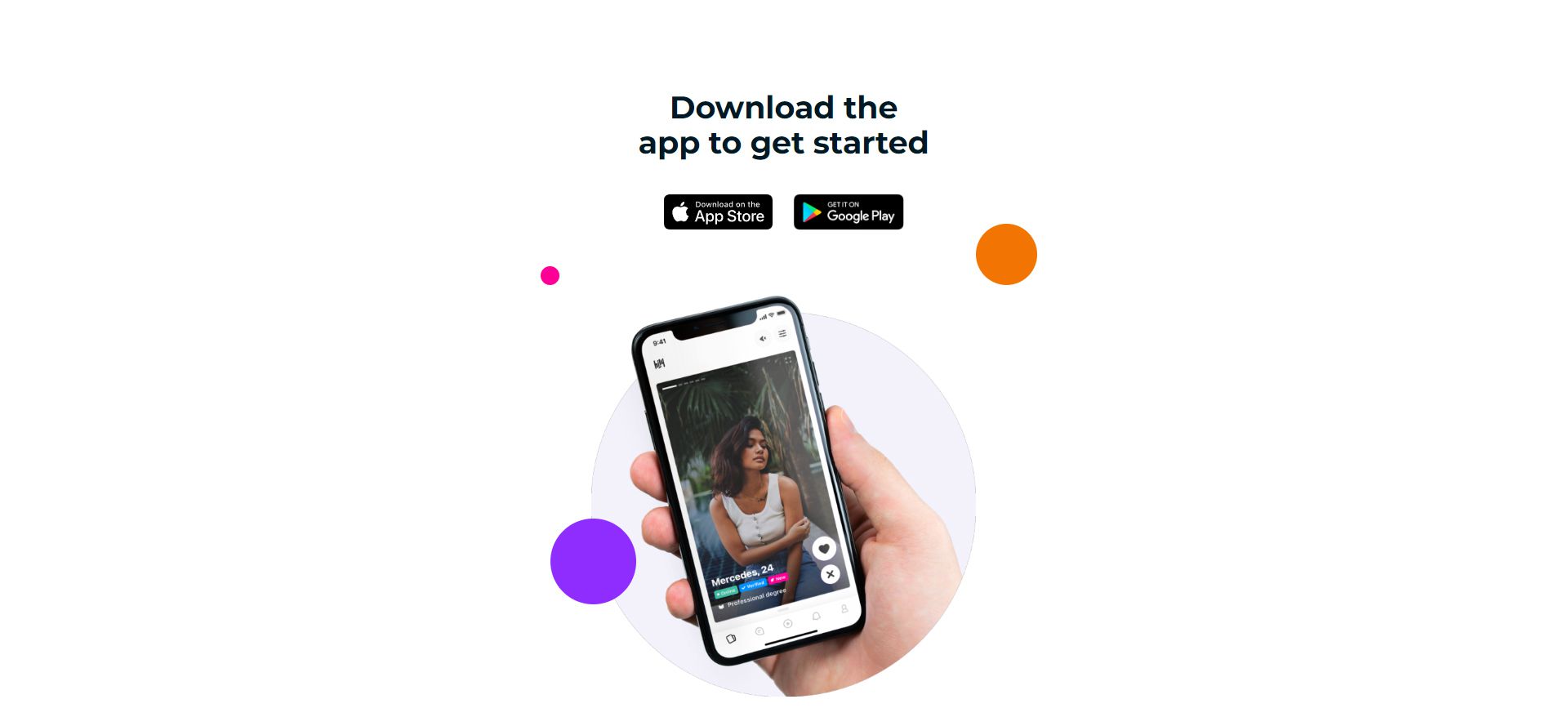
Once you're in, Hily gives you two main ways to look at people: the swipe deck (Finder) and a Stories-style feed of short videos and status updates. The video feed is the genuinely different part. Instead of judging six static photos, you watch someone talk for fifteen seconds. I liked it more than I expected — voice and body language tell you a lot — but only about one profile in five had a story posted, so it's a bonus layer, not the main experience.
Profile quality is average for a swipe app. Most people had three to six photos, a short bio, and interest tags pulled from the quiz. Maybe a third wrote nothing at all in the bio. Age spread in my tests ran heavily 21 to 34, thinning out fast past 40. Big metro areas (Los Angeles, Chicago, Dallas, Miami) had plenty of fresh profiles; in a city of about 200,000 I ran out of new local profiles in roughly two evenings of swiping, after which Hily started showing me people 60+ miles away and repeating faces I'd already skipped.
That's the real limit of Hily in 2026: it's a big-city app. If you live somewhere smaller, the pool empties quickly, and no subscription fixes that.
On activity levels: better than I feared. Green online dots were common in evening hours, and the "recently active" signals matched actual reply behavior. Bots and obvious scam profiles were rarer than on many free apps — the photo verification and Hily's internal reputation scoring (get reported or blocked often enough and you get quietly shadow-banned) clearly do work. I still ran into a handful of the classic patterns: model-quality photos with a one-line bio, an immediate request to move to another messaging app, or an account pushing a link. Report and block took two taps and the profiles disappeared from my feed for good.
Search is the weak spot. Free filtering is basically age, distance, and gender. Anything more specific — height, education, whether they want kids, relationship goals — sits behind premium filters. If you're the type who wants to filter precisely, this will frustrate you, and you may prefer platforms built around detailed matchmaking or age-specific communities instead.
Reaching Out and What Contact Costs
Here's where Hily earns real credit: you can message your matches for free, without a subscription and without a daily cap on messages in an existing chat. Plenty of apps make you pay to say hello. Hily doesn't, as long as there's a mutual like.
The catches are on the discovery side. Free likes are limited — I got roughly 30 to 40 a day before the app told me to wait or upgrade — and skips are metered too, which feels petty. Sending a chat request to someone who hasn't liked you back is a premium feature. You can see that someone liked or visited you as a free user, but their photo is blurred until you pay, which is the single most effective (and most irritating) upsell in the app. That blur worked on me. I'll admit it.
Chat tools are simple and fine: text, photos, GIFs, voice notes, video calls with matches, and live broadcasts if you're into that. There's a filter that blurs incoming photos flagged as explicit and screens abusive language before it hits your inbox. In our testing it caught the obvious stuff and occasionally over-flagged harmless messages, but I'd rather have it than not.
Response rates were roughly what you'd expect from a mainstream swipe app rather than something special. From a fully filled-out male profile with five photos and a verified badge, I averaged around one match per 20–25 likes in a busy metro, and about one in three matches replied to a first message. Women on our test team saw far more incoming likes and, predictably, a lot of low-effort openers. Conversations tended to move fast — Hily's crowd is young and used to quick swipe-and-chat apps, so a message left for two days is usually a dead thread.
Life After You Pay for Hily Premium
US pricing at the time of our testing looked like this: about $24.99 for one week, $74.99 for three months (roughly $25 a month), and $119.99 for a year (about $10 a month). Prices shift with promos, region, and the store you buy through, and Hily loves throwing discounted offers at you around day three. You can also buy individual boosts or feature packs à la carte instead of subscribing.
The weekly plan is bad value. Twenty-five dollars for seven days on an app where you might exhaust local profiles in a weekend makes no sense. The annual plan is where Hily gets reasonable — ten dollars a month for unlimited likes, unlimited rollbacks, premium filters, incognito mode, visitor and liker photos unblurred, and chat requests to people who haven't matched with you. Whether that's worth $120 depends on whether you'll still be using the app in month eight, and most people won't be.
What actually changed after paying: unblurred likers saved me time (I matched with two people I'd have swiped past), premium filters made the feed noticeably more relevant, and Boost produced a short spike in views — maybe an extra dozen profile visits in a 30-minute window, with a couple of matches out of it. Incognito mode is genuinely useful if you're in a small town and don't want coworkers finding you. What didn't change: the size of the local pool. Premium makes browsing better, not bigger.
On privacy and safety, Hily is above average. Photo verification is enforced, the reputation system removes repeat offenders, you can hide your distance and online status, block and report take seconds, and location isn't shown precisely. Complaints we found from US users mostly cluster around three things: subscriptions that were hard to cancel (they run through the App Store or Google Play, so cancel there, not in the app), occasional app crashes and slow photo loading on older Android phones, and the sheer volume of notifications and offer pop-ups. Turn off promotional notifications on day one and the app becomes much more pleasant.
One more honest note: because signup is so easy, some accounts are inactive shells. Hily doesn't clearly mark stale profiles, so you'll occasionally message someone who last opened the app in March. Not a scam — just filler. If you'd rather be on an app with a wider international crowd or something with an entirely different dynamic like arrangement-based platforms, that's a different search altogether.
Final Verdict on Hily
Hily is a legitimate, reasonably well-policed dating app that does the basics right and oversells its extras. Our Lovezoid rating lands it as a good free option and an average paid one.
- Best for: singles 22–38 in US cities who want a low-effort app with video profiles, free messaging after matching, and real verification.
- Skip it if: you live in a small town, you're over 45, or you need detailed search filters and long-form compatibility matching.
- Money advice: avoid the $24.99 weekly plan entirely; only the annual plan (~$10/month) is decent value, and only if you date actively.
- Expect: few bots, plenty of pop-ups, fast-moving chats, and a local pool that empties quickly outside big metros.
Try Hily free for a week before you spend a cent — if your feed still has fresh faces on day five, it's working for you, and if it doesn't, check the comparison table above for options that suit you better.
FAQ
Is this app full of bots and fake profiles, or are the people real?
Most profiles are real people, but you will run into some fakes and spam accounts, especially in bigger cities. The photo verification badge is the fastest way to filter them out — if someone has no verified badge, only one photo, and immediately pushes you to text on another platform or a "trading" site, that's a scam pattern. Report and block instead of arguing; the moderation team does act on repeat reports.
Can I actually get matches and conversations without paying anything?
Yes — swiping, matching, and messaging your matches are free, which is more than some mainstream apps allow. The catch is daily like limits and no way to see who already liked you, so free users usually get fewer conversations per week. Plenty of people meet dates without ever paying; it just takes more patience and better photos.
How much does the paid membership really cost per month in the US?
Expect roughly $20–$35 per month for a one-month plan, dropping to around $10–$15 per month if you commit to three or six months. Extras like boosts and "compliments" are sold separately as coins, which is where costs quietly add up. Subscriptions auto-renew, so cancel through your App Store or Google Play settings — deleting the app does not stop billing.
How long does it usually take to get a first date?
Active users in mid-size or large US cities often set up a first date within one to three weeks. Men in crowded markets typically wait longer and should expect a low reply rate, while women get more matches but also more low-effort openers. If you're in a rural area, the local pool may be thin enough that you exhaust it in a few days.
Is this a serious relationship app or just another hookup swipe app?
It sits in the middle — the swipe format attracts casual users, but the personality quizzes, "intentions" settings, and story features draw a lot of people looking for something ongoing. Realistically you'll see both, so state your intent clearly in your bio and in the first few messages. If you strictly want marriage-minded matches, specialized platforms with longer questionnaires will filter better than any swipe-based app.