

















Top 10 LGBTQ Dating Sites in the USA
Let's be blunt: a lot of the "best LGBTQ dating" lists floating around were written by people who never signed up for a single account. That's why our team at Lovezoid actually made profiles, sent messages, paid for a month here and there, and tracked who replied. What follows is the honest version — including the parts that annoyed us.
The short answer is yes, solid options exist for queer singles in the USA, and the comparison table below shows the platforms that held up in our testing. Most of them let you register free, browse profiles, and check whether anyone in your area is active before you spend a dollar. Start there, not with your credit card.
Ready to see who's nearby? Skim the table first, then come back for the details on how to pick well and stay safe.
 GaysGoDating

 EzGay
EzGay
 Adam4Adam

 Men Nation
 Date4you
 WeMeetToday
 HornySpot
Are These Sites Even Real?
Almost everyone asks the same three questions before signing up: Are the profiles real people? Am I going to get charged for nothing? And is a niche site actually better than the big mainstream apps everyone already uses?
Those doubts are earned. Queer dating platforms have a mixed history — some are run by serious companies with moderation teams, and some are thin shells built to collect subscription fees. We've opened accounts where the "new members near you" section clearly recycled the same twelve photos. We've also opened accounts where twenty real people messaged us in the first week.
The other common worry is privacy, and it's a bigger deal in this niche than most guides admit. If you live in a small town in Alabama or a rural county in Ohio, you may not be out at work, at church, or to your family. Uploading your face to a dating site feels different when a coworker could be browsing the same platform. That fear keeps a lot of people on the sidelines, and it deserves a real answer instead of a cheerful "just be yourself!"
Then there's the bot question. Fake accounts are absolutely a thing — but they cluster on certain kinds of sites, and they follow patterns you can learn to spot in about thirty seconds. We'll get to those patterns further down.
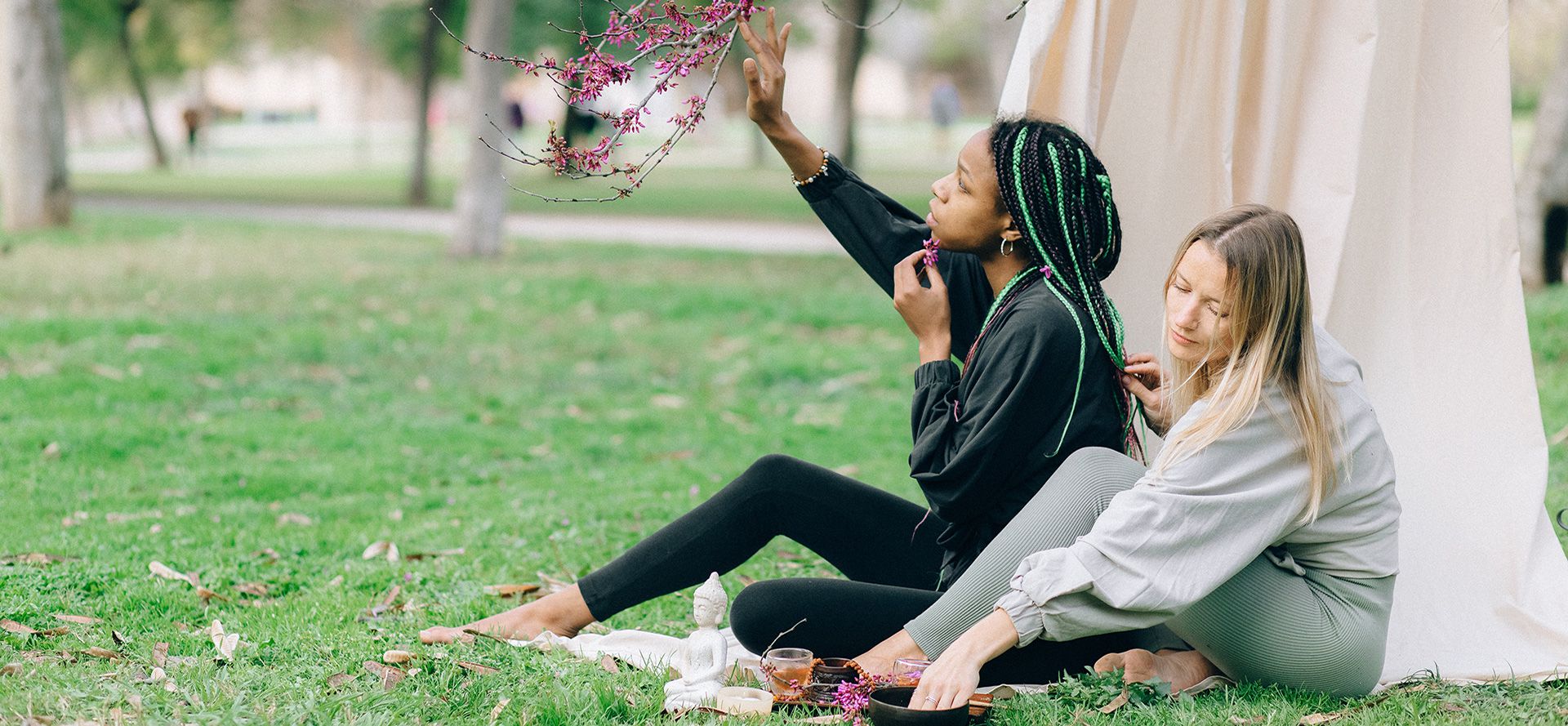
What LGBTQ Dating Sites Actually Deliver
Here's the honest picture. A good platform in this space gives you three things: a user base where your orientation and gender identity are the default rather than a filter setting, tools that let you control who sees you, and enough local activity that messaging doesn't feel like shouting into a canyon. That's it. No site delivers a soulmate on a schedule.
What they don't deliver: instant volume in every zip code. In Chicago, Atlanta, Seattle, or the Bay Area, you'll see hundreds of active profiles within a short radius. In a county of 40,000 people in Kansas, you might see nine, and three of them live an hour away. That's not the site failing — that's math. The fix is widening your search radius and being willing to drive, or leaning on chat and video before meeting.
So why bother with a specialized platform when the general apps are free and everyone's on them? Because on mainstream apps, queer users are a subgroup inside a straight-oriented product. Bi women get bombarded by couples looking for a third. Trans and nonbinary users get misgendered by people who swiped without reading. Gay men looking for something serious get funneled into hookup-heavy feeds. In our Lovezoid testing, the specialized sites cut down that friction a lot — people arrived already understanding the basics, which meant fewer conversations spent explaining yourself.
Who's actually using these platforms? A wide spread, honestly. Gay and bi men in their 20s through 50s make up a big chunk. Queer women and lesbians tend to be a smaller but noticeably more conversational group — longer messages, slower pace, more interest in dates than in quick meetups. There's a steady group of people in their 40s and up who came out later in life and are dating openly for the first time. And there's a real population of bi and pansexual people who use these sites specifically because they're tired of being treated as a novelty elsewhere.
Goals vary just as much. Some users want marriage and a mortgage. Some want a Friday night. Plenty want friendship and community first, which is why forums, groups, and event listings matter more on queer platforms than on general ones. If you'd rather ease in through conversation than a rapid-fire swipe feed, sites built around slower, message-first dating tend to suit that better.
Green Lights and Warning Signs
A legitimate platform makes money by keeping members happy long enough to renew. A shady one makes money by getting a card number once. The difference shows up fast if you know where to look.
This is also how our picks earned their spots. We looked at real user activity — last-login timestamps, reply rates to plain messages we sent, whether new profiles appeared over a two-week window. We checked safety infrastructure: photo verification, block and report tools, how fast obvious fakes disappeared after being flagged. And we checked pricing value: what the free tier actually lets you do, whether the paywall hits before or after you can tell if anyone's there, and how easy cancellation is. Sites that failed the cancellation test didn't make the table, period.
- Green light: You can browse real local profiles and see last-active dates before paying anything.
- Green light: Identity or photo verification badges exist, and a decent share of members have them.
- Green light: Gender and orientation fields go beyond two boxes, with pronoun options and control over who sees your profile.
- Green light: Clear pricing, visible cancellation link, no mystery "premium credits."
- Red flag: Five messages land in your inbox within two minutes of signup, all from stunning strangers.
- Red flag: You can't read a single message without upgrading, and you can't tell whether the sender is real.
- Red flag: Profiles with one photo, no text, and a location that shifts between visits.
- Red flag: Terms of service admitting the site uses "entertainment profiles" or staff-operated accounts. Yes, some really say that.
We'll be honest — not every platform in this niche is legitimate, and a couple of the ones with the loudest ads are the worst offenders. Sticking to established sites with a public track record, like the ones in the table above, removes most of the risk before you even start.
Try Free Before You Pay
The smartest approach is to test two or three sites on free accounts for a week before spending anything. Free tiers usually let you build a profile, browse local members, and see activity levels — which is exactly the information you need to judge whether a paid month is worth it. Judge a site by who's there, not by its marketing.
Here's the process we'd recommend to a friend:
- Pick two or three from the list above — ideally one broad LGBTQ platform and one focused on your specific community, since a queer women's space and a gay men's space feel nothing alike.
- Set up a real profile before you judge anything. Three to five clear photos, at least one full-body shot, no group pictures where nobody can tell which person you are. Write 100–150 words that say what you actually want, name a couple of specific interests, and state your pronouns if that matters to you.
- Search your area with a realistic radius. Try 25 miles, then 50. Count how many profiles were active in the past week. Under ten is thin; forty or more is workable.
- Send eight to ten short first messages. Reference something from their profile — a photo location, a band, a line in their bio. Skip "hey" and skip anything about their body. Two or three sentences max.
- Wait five days, then compare. Whichever site produced the most real replies is the one worth paying for. Cancel or ignore the rest.
On features, prioritize what actually matters for queer dating: granular orientation and identity options, the ability to hide your profile from search or from specific users, incognito browsing, and location fuzzing if you're not fully out. Video chat inside the app is genuinely useful here — it verifies the person and lets you meet without handing over a phone number. Pretty design ranks near the bottom of the list.
On money, monthly rates in the USA generally run somewhere between $15 and $40, with three- and six-month plans cutting that a lot. Personally, we prefer paying for one month first even when it costs more per month. If the site works, extend it. If it doesn't, you lost twenty bucks instead of a hundred and twenty.
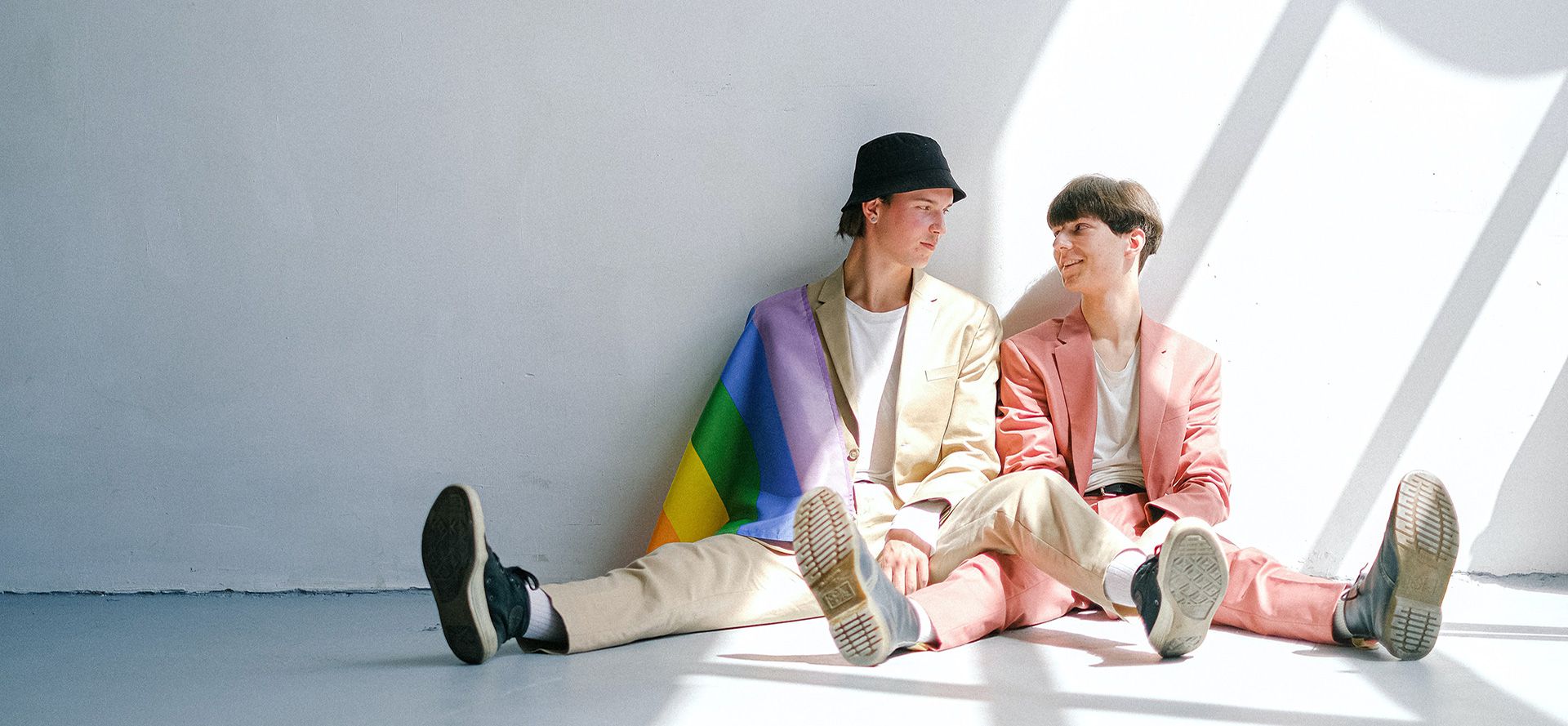
A few mistakes we see constantly in this niche: writing a bio that's only a list of what you don't want, leading with politics as a personality (though shared values matter, and some people do better on values-aligned dating platforms), copy-pasting the same opener to twenty people, and vanishing mid-conversation because a new match appeared. Also — labels. If someone's identity or presentation confuses you, ask a respectful question instead of guessing out loud. That single habit will improve your reply rate more than any photo upgrade.
Safety Rules for LGBTQ Dating
Safety in queer online dating means two separate things: avoiding financial scams and protecting your privacy. Both need attention. The scam side follows predictable scripts, and the privacy side comes down to controlling what you share and when.
The scams to know about, as of 2026: the fast-moving romance con, where someone declares strong feelings within days and then hits a sudden emergency needing money. The crypto pitch, where a warm chat drifts toward an "investment platform" they can help you set up. Sextortion, where explicit photos get traded and then used as leverage — this one targets our community heavily, and the threat is often "I'll send these to your family." And the fake verification scam, where a match sends you a link to a "safety check" site that wants your card details. No legitimate platform ever asks you to verify through an outside link a stranger sent you.
There's also a pattern specific to closeted users: someone figures out you're not publicly out and uses that as pressure. Blackmail, guilt, threats to post screenshots. If anyone gestures at outing you, block and report immediately. Do not negotiate, do not pay, and if it escalates, contact local police — this is a crime in every state.
You don't owe anyone your coming-out story on a first chat. Share it when it feels right, not when someone pushes.
Practical habits that work: video chat before meeting, even briefly, since it kills most fake profiles instantly. Reverse-image-search photos that look too polished. Keep conversation on the platform until you trust the person — scammers push for texting apps fast because they can't be reported there. Tell one friend where you're going and who you're meeting, and share your live location. Meet in public first: a coffee shop, a busy bar, a bookstore. Drive yourself or arrange your own ride home so you're never dependent on your date.
Know when to walk away. Refusal to video chat after a couple of weeks, any request for money regardless of the story, pressure to move faster than you're comfortable with, or a mismatch between their photos and how they talk — these are all reasons to stop replying. You don't need a polite exit speech. Block and move on.
One last note on where queer dating sits in the USA right now. Acceptance varies wildly by region, and that shapes how people use these platforms — someone in Portland may put their full name and face up, while someone two states over uses a first initial and blurred photos. Neither is wrong. Respect the difference, and don't push anyone to be more visible than they're ready to be. The same care applies across other identity-focused spaces, whether that's Black singles platforms, Asian dating communities, or campus-focused sites where a lot of younger queer users get their start.
LGBTQ dating online works better in 2026 than it did five years ago — verification tools improved, identity options got broader, and the sites that were coasting on fake profiles mostly got exposed. Our top picks for this niche are the ones that survived that shakeout. Pick one or two from the table, build a profile you'd actually want to read, and send a few messages this week. Registration is free on all of them, so looking around costs you nothing but ten minutes.
FAQ
Are LGBTQ dating sites safe if I'm not out yet?
They can be, but you have to set up your privacy yourself — no platform does it for you. Use a first name only or a nickname, upload photos that haven't already been posted to your social media (reverse image search is real), and skip anything that links your profile to your Facebook or Instagram account. Most specialized platforms let you hide your profile from search or block it from specific locations, which matters a lot if you live in a small town where your face is recognizable.
Why use a niche LGBTQ platform when mainstream apps already have gender and orientation filters?
Because filters on mainstream apps are often leaky and the moderation is weaker for queer users. Plenty of lesbians report straight men showing up in their queue, and trans and nonbinary users regularly get misgendered or fetishized by people who ignored the filters entirely. Specialized platforms won't eliminate that, but the baseline assumption is different — you spend less energy explaining yourself and more time actually dating.
How much do LGBTQ dating sites actually cost once the free trial ends?
Expect roughly $15–$40 per month in the US, with per-month prices dropping to around $10–$20 if you commit to three or six months. The free tier usually lets you browse and get matched but limits messaging, so you'll hit a wall fast if you're actually getting responses. Watch for auto-renewal — it's the single most common complaint, so cancel through your app store or account settings before the renewal date, not by deleting the app.
What's the fake profile situation like on LGBTQ dating platforms?
Fakes exist, and queer platforms attract a few specific patterns: fake "couples" hunting for a third, straight men posing as women on lesbian sites, and romance scammers who move fast to WhatsApp or Telegram. The tells are consistent — model-quality photos with no candid shots, immediate declarations of feeling, refusal to do a quick video call, and any mention of money, gift cards, or crypto. A 60-second video chat before meeting filters out almost all of it.
Do people on these sites want real relationships or mostly hookups?
Both, and the mix depends heavily on which corner of the community you're in. Gay men's platforms skew more toward casual by design, while lesbian, bi, and trans-focused spaces tend to lean relationship-oriented — though "we went on two dates and now we're moving in" is its own well-known pattern. The practical fix is stating your intent plainly in your profile; queer daters are generally direct about this, and being vague just wastes both people's time.
How long does it usually take to get a real date, especially outside a big city?
In a metro area like Chicago, Atlanta, or Los Angeles, an active profile can turn into a first date within one to three weeks. In rural areas or small towns, it's genuinely harder — you may exhaust the local pool in a few days and need to widen your radius to 50–100 miles or accept longer gaps between real prospects. Many people in those regions combine a specialized platform with regional queer groups and events rather than relying on swiping alone.